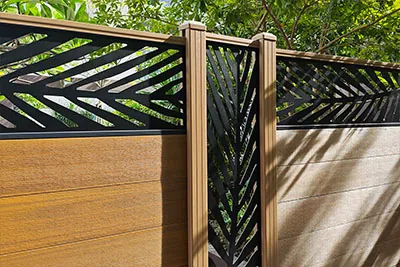
Dual-Shield Co-Extrusion Technology
Two Premium Cap Layer Options. One Uncompromising Standard.
Most composite fences are single-layer extrusions — the same material runs from surface to core. That means the wood-fiber blend sitting inside the board is the same material facing the sun, rain, and UV radiation on the outside.
Co-extrusion changes this completely.
During manufacturing, we simultaneously extrude two distinct materials through a precision-engineered die head — fusing a high-performance polymer shield around the entire circumference of the WPC core in a single, continuous process. No glue. No lamination. No secondary bonding. The outer cap and inner core are molecularly fused under heat and pressure, creating a 360-degree seamless protective armor that cannot peel, crack, or delaminate.
Every MecoFence panel features a 1mm-thick co-extruded outer layer — significantly thicker than the industry-standard 0.3–0.5mm cap used by most competitors. More material standing between your fence and the elements. More UV absorption. More scratch resistance. More years of color stability.
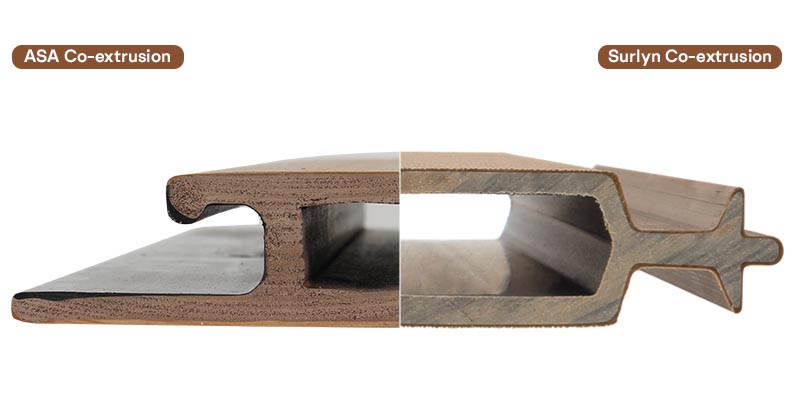
MecoFence is one of the few composite fence manufacturers offering two co-extrusion cap layer technologies — giving our partners the flexibility to match the right material to the right market.
ASA Co-Extrusion
Acrylonitrile Styrene Acrylate · 1mm Cap Layer
ASA is the gold standard for outdoor UV resistance. Unlike standard polymers, ASA's acrylate rubber backbone contains no UV-attackable double bonds — giving it inherent, molecular-level protection against sunlight degradation.
The result? Color stability that competitors simply cannot match with PE-based caps.
- UV Resistance: <5% color change after 10 years of direct sunlight
- QUV Aging: Grey scale 4.5 after 3,000 hours accelerated weathering
- Surface Hardness: Shore D 70 (ASTM D2240-05) — comparable to hardwood
- Heat Tolerance: Continuous service up to 100°C (212°F)
- Chemical Resistance: Resistant to oils, cleaning agents, and stress cracking
Surlyn Co-Extrusion
Dow Ionomer Technology · 1mm Cap Layer
Surlyn® is a DuPont/Dow ionomer — the same material engineered into golf ball covers for its legendary impact resistance and self-healing properties. Its ionic crosslink network gives it a unique ability: minor surface scratches can recover on their own.
This makes Surlyn the premium choice where physical contact and moisture are constant.
- Self-Healing: Ionic polymer network passively repairs minor scratches
- Impact Resistance: Exceptional toughness — absorbs heavy impacts without cracking
- Moisture Barrier: Superior hydrophobic performance for high-humidity climates
- Stain Resistance: Low surface energy repels dirt, grease, and organic staining
- UV Protection: Advanced stabilizer package with grey scale 4.5 QUV performance
How Our Cap Layers Compare
MecoFence ASA & Surlyn® vs. industry-standard PE co-extrusion
| Performance Metric | Standard PE Cap(Industry Typical) | MecoFence ASA(1mm Cap) | MecoFence Surlyn®(1mm Cap) |
|---|---|---|---|
| Cap Layer Thickness | 0.3–0.5mm | 1.0mm | 1.0mm |
| UV / Weathering Resistance | Moderate — fades 15–20% in 5 yrs | ★★★★★Inherent molecular UV stability | ★★★★☆Stabilizer-enhanced UV protection |
| Surface Hardness | Shore D 55–62 | Shore D 70 | Shore D 65+ |
| Scratch Recovery | None | None | ✓ Self-healing ionic network |
| Impact Resistance | Good | Very Good | Exceptional |
| Moisture Barrier | Good | Good | Superior — ionomer hydrophobic |
| QUV Aging (3,000h) | Grey Scale 3.0–3.5 | Grey Scale 4.5 | Grey Scale 4.5 |
| Ideal Climate | Mild / sheltered | High-UV, hot & dry | Coastal, tropical, humid |
How We Build It
Our co-extrusion process in three steps
Dual-Extruder Feeding
Two independent extruders prepare separate material streams — the WPC core blend (HDPE + FSC-certified wood fiber) and the ASA or Surlyn® cap compound — each at precisely controlled temperatures.
Precision Die Fusion
Both molten streams merge inside a co-extrusion die head, where the cap layer is evenly distributed around all four sides of the core. The materials fuse under heat and pressure — no adhesive, no tie layer needed.
Cooling & Calibration
The fused profile passes through vacuum calibration and water cooling tanks, locking the 1mm cap layer into permanent position. A unified, inseparable composite structure ready for surface treatment and cutting.
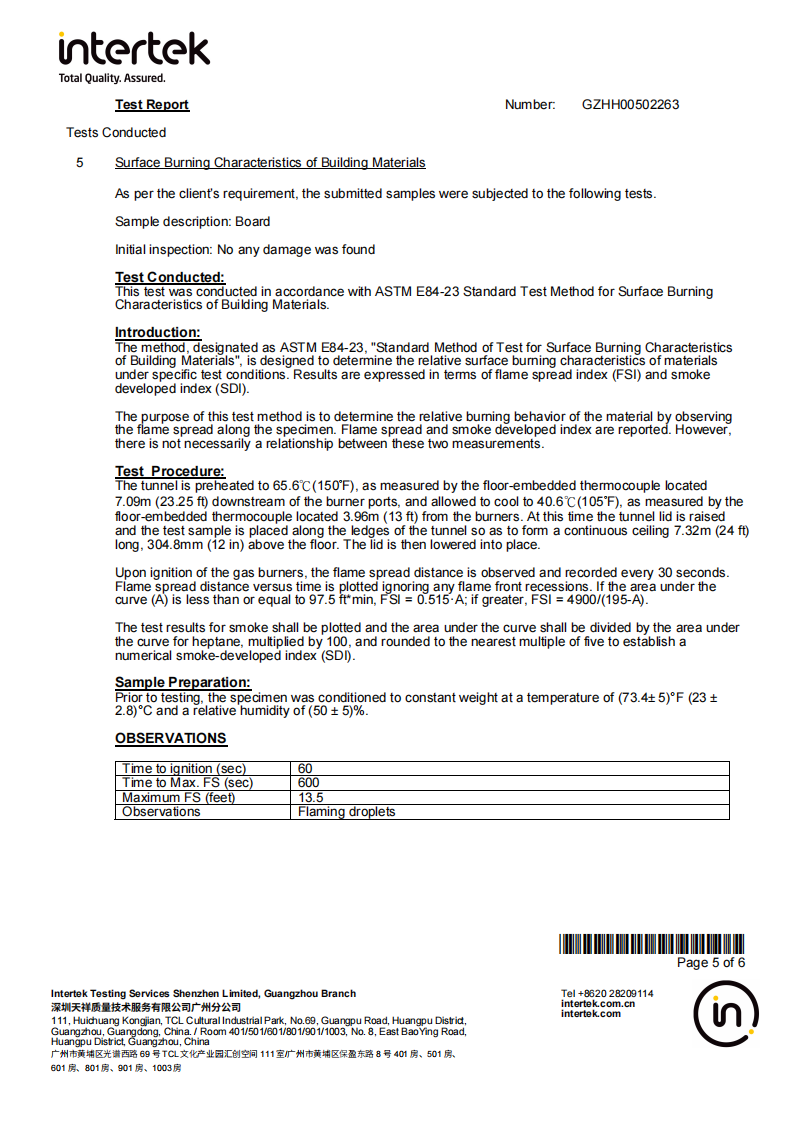
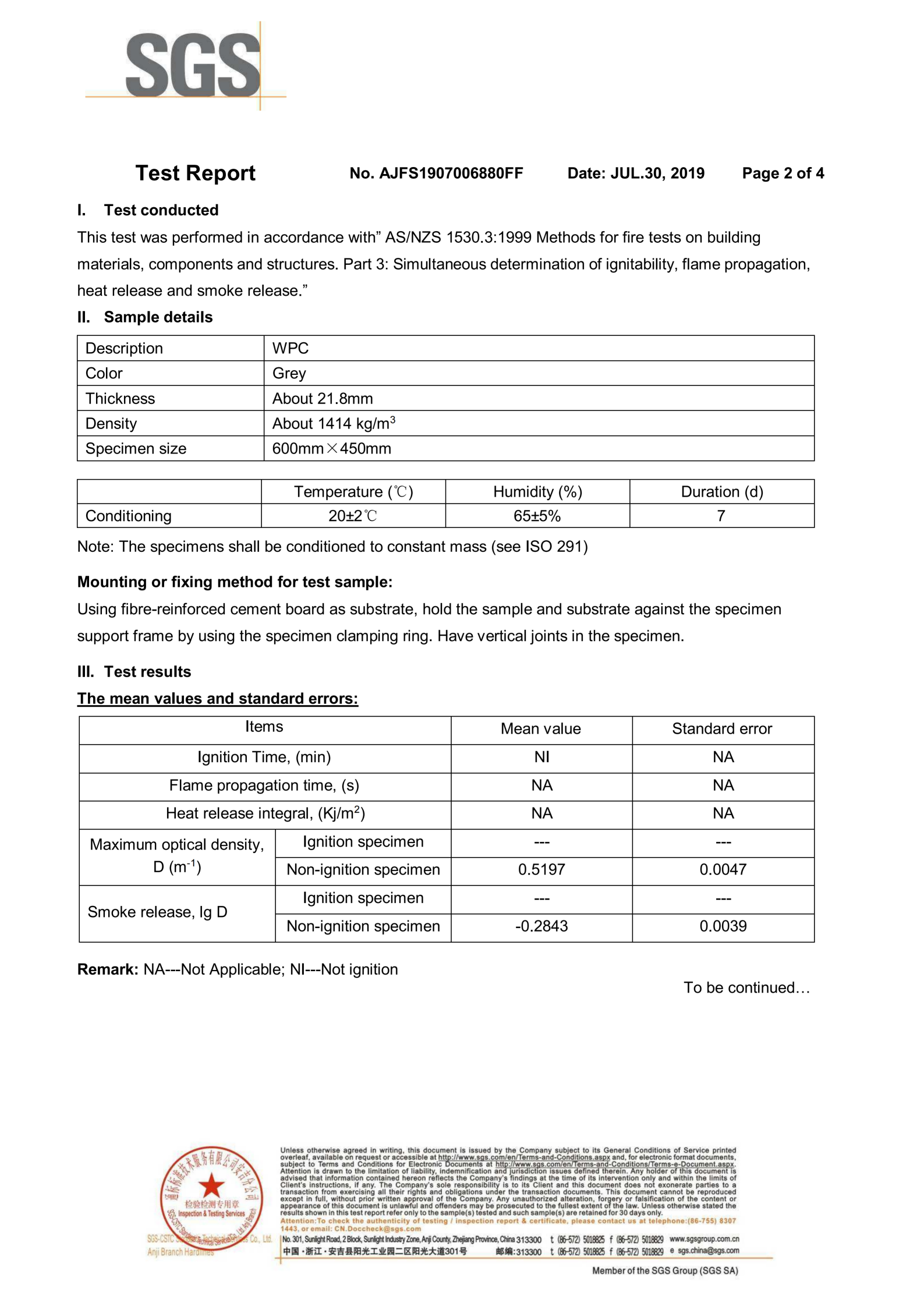
Every MecoFence co-extruded panel is tested against EN 14041, ASTM E84 (Class A fire rating), and undergoes our 8-step quality control protocol — including 3,000-hour QUV accelerated aging and 14-cycle boiling water immersion.
Want the deep technical comparison? Read our full breakdown: Co-Extrusion vs Traditional WPC Fence →
Explore Our Composite Fence Range →