
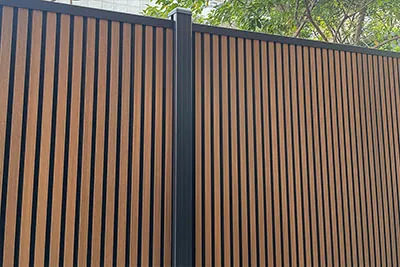
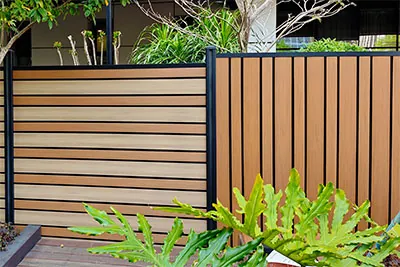
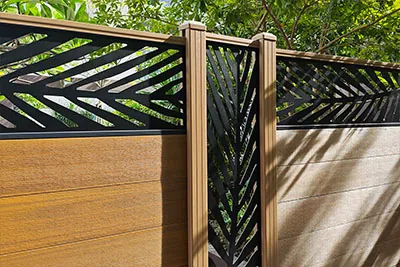
Here’s a fact that trips up even experienced contractors: the post is the first thing to fail — not the panel.
You can spec the most gorgeous co-extruded WPC privacy boards on the planet. But bolt them to the wrong post? You’ll be back on-site in 18 months, explaining to a frustrated client why their “lifetime” fence is leaning like a drunk lamppost.
That’s the reality nobody talks about.
Most comparison guides lump all fence materials into one debate — wood vs. vinyl vs. composite — and completely ignore the post system that holds everything together. That’s like reviewing a car without mentioning the chassis.
So let’s fix that.
This guide breaks down the three post types used in modern WPC fencing systems — aluminum, co-extrusion WPC composite, and galvanized steel — with real specs, honest trade-offs, and clear guidance on when each one makes sense.
Why the Post Matters More Than the Panel
Think of your fence post as the foundation of a building.
The panels are the walls — they look stunning, provide privacy, earn compliments. But the posts carry the structural load. Wind pressure. Soil heave. Decades of freeze-thaw cycles.
When a composite fence fails, it’s almost never the board that snaps. It’s the post that wobbles, leans, or corrodes at the ground line where moisture meets soil.
This is why MecoFence’s complete 2026 guide to composite fencing explicitly recommends: “Post material — Aluminum ≥ Steel >> Composite” as the professional hierarchy.
But that hierarchy has nuance. Let’s unpack it.
Before we deep-dive, here’s the side-by-side summary. Bookmark this table — you’ll reference it again.
| Specification | Aluminum Post | WPC Composite Post | Galvanized Steel Post |
|---|---|---|---|
| Material | Extruded 6063-T5 aluminum alloy | HDPE + wood fiber core, Surlyn™ co-extrusion cap | Hot-dip galvanized carbon steel |
| Profile Options | Square Y-shape (80×80mm) or Round (80mm OD) | 4″×4″ (100×100mm) solid core | Square tube 60×60mm to 80×80mm |
| Wall Thickness | 1.5mm – 1.7mm | Solid (no hollow core) | 1.5mm – 2.0mm |
| Weight / 6ft Post | ~3–5 lbs (lightest) | ~14–20 lbs | ~15–25 lbs (heaviest) |
| Corrosion | Excellent — naturally rust-proof | Good — no rust, no rot | Moderate — zinc coating dependent |
| Wind Rating | 70–90+ mph (internal ribs) | 50–65 mph | 80–100+ mph |
| Lifespan | 30+ years | 20–25 years (co-extruded) | 20–30 years (climate-dependent) |
| Cost / Post | $25–$45 | $15–$25 (lowest) | $30–$50 |
| Color Matching | Powder-coat: Black, Silver, White, Bronze | Exact match with WPC panels | Limited — Black, Bronze standard |
| Best For | Residential, coastal, modular systems | Budget builds, aesthetic-match, sheltered sites | High-wind, security, commercial, gates |
Now let’s dig into each one.
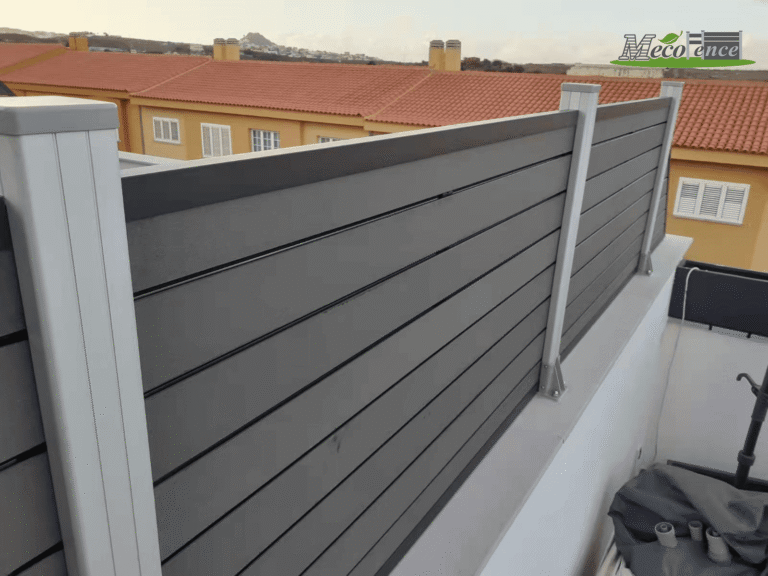
If you install composite fences for a living, aluminum is probably already your go-to. And for good reason.
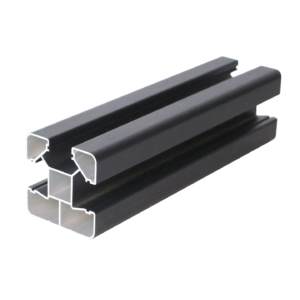
Why Contractors Default to Aluminum
- Zero rust. Ever. Aluminum doesn’t corrode — not in coastal salt air, not buried in wet clay, not after 30 winters. As Maintenance-Free Outdoor Solutions confirms, aluminum is impervious to the elements and will not corrode.
- Ridiculously lightweight. A 6-foot aluminum post weighs 3–5 lbs versus 15–25 lbs for steel. That’s a one-person lift versus a two-person job — which directly impacts labor cost on every single post hole.
- Elastic under wind load. When a 90 mph gust hits an aluminum post, it flexes to absorb energy and springs back to true. It doesn’t kink. MecoFence’s wind resistance analysis explains this ductile behavior also makes aluminum safer in catastrophic failure — it bends slowly instead of snapping into flying debris.
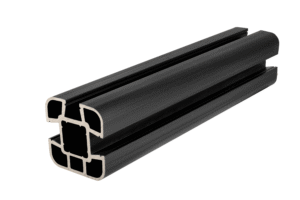
- Engineered Y-Slot profiles. MecoFence offers two proprietary aluminum profiles:
- Square Y-Shape (80×80mm): Flagship design with 1.5–1.7mm wall thickness. Boards slide directly into Y-slot channels — no external brackets, no screws for panels. Higher structural rigidity than the round option.
- Round Profile (80mm OD, 1.5mm wall): Cost-effective alternative with a distinctive rounded aesthetic most competitors don’t offer. Same Y-slot technology at a lower price point.
- Powder-coat that lasts decades. UV-stable coatings deliver color retention without repainting — a huge selling point for maintenance-weary homeowners.
Explore both profiles on the MecoFence Aluminum Post product page.
The Y-Slot: A Small Detail That Changes Everything
The proprietary Y-shaped channel built into every MecoFence aluminum post serves three functions simultaneously:
- Anti-jam design — Boards slide in smoothly without sticking, even in cold weather when materials contract.
- Hydrophobic drainage — Water channels away from the panel edge, preventing moisture pooling at the joint where most fence systems eventually degrade.
- Slight angle adjustment — Panels can follow gentle terrain slopes without custom-cutting boards. This saves hours on sloped installations.
That’s a lot of engineering in a post profile most people never look twice at.
Where Aluminum Falls Short
- Lower brute strength than steel. For heavy commercial security or extreme wind zones (100+ mph), steel’s welded construction provides more impact resistance.
- Can’t be field-welded easily. Aluminum requires specialty TIG welding for on-site modifications.
- No wood-grain texture match. Powder-coated aluminum looks clean and modern, but doesn’t replicate the natural wood-grain appearance of WPC panels. For some projects this contrast is a feature; for others, it’s a limitation.
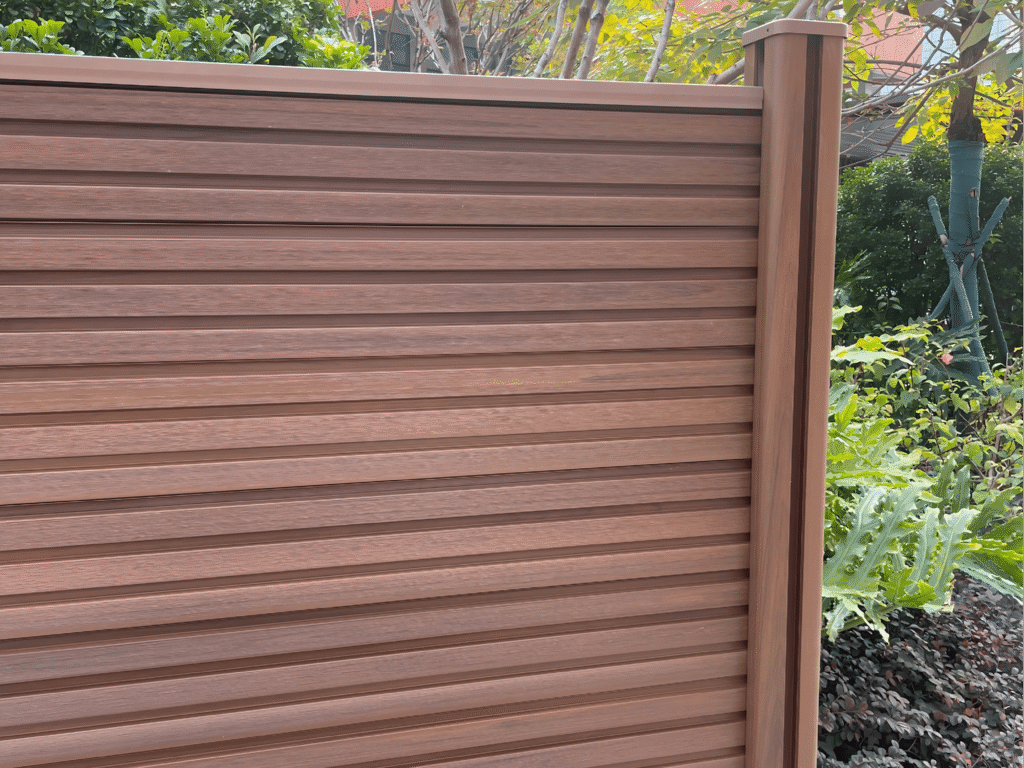
Want the entire fence — posts, rails, and panels — to look like one seamless system?
No visible metal. No color mismatch. Just uniform wood-grain from top to bottom.
That’s the unique value of co-extrusion WPC posts.
The Case for WPC Composite Posts
- 360° color consistency. The MecoFence Super Kit WPC Post achieves full visual unity — same Teak, Dark Grey, or Antique finishes with matching wood-grain texture across posts, rails, and panels.
- Surlyn™ co-extruded outer shell. Not a standard plastic coating. Surlyn is the same ionomer resin used in premium golf ball covers — chosen for extreme impact resistance that prevents the deep scratches and surface whitening plaguing uncapped WPC posts.
- HDPE-based solid core. Reinforced wood-plastic composite with a solid (not hollow) cross-section. Substantially more rigid than first-gen hollow WPC tube posts.
- Patented anti-wobble system. The Super Kit includes a hidden internal plastic skeleton plus a concealed base-plate that locks the post rigid — specifically engineered to address the #1 complaint about composite posts: lateral flex under wind.
- Hidden base-plate mounting. No exposed concrete or ugly metal brackets at ground level. Clean lines, premium look.
- Tariff advantage. WPC posts classified under HS 3925.90 avoid the aggressive 2026 aluminum tariff increases — a critical cost consideration for importers. (See MecoFence’s tariff strategy analysis.)
The Honest Limitations
- Lower wind rating than metal. Even with the anti-wobble kit, WPC posts typically handle 50–65 mph. For coastal projects or anything above 6 feet, aluminum is the safer call.
- Thermal expansion. All composite materials expand and contract with temperature. Proper gaps (3–5mm) are mandatory. (Our upcoming thermal expansion guide covers this in detail.)
- Heavier than aluminum. At 14–20 lbs per post vs. 3–5 lbs for aluminum, WPC posts require more effort across a 200-foot run.
Galvanized Steel Posts: The Brute-Force Option
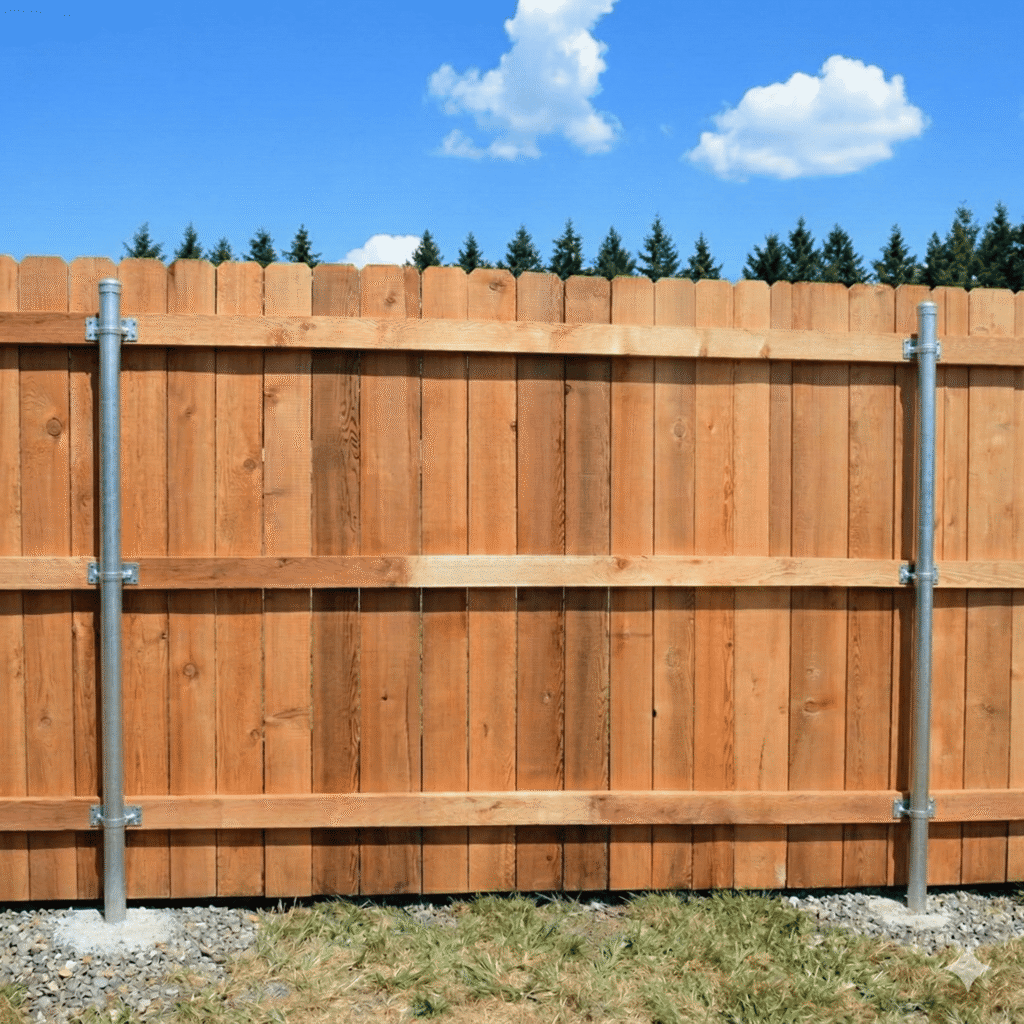
When the job calls for maximum structural strength — high wind zones, commercial perimeters, security fencing, or gate locations — steel is the answer. Full stop.
Why Steel Wins on Raw Strength
- Highest torque resistance. Galvanized steel handles wind loads exceeding 80–100+ mph. As Cascade Fence & Deck notes, steel posts provide excellent structural support and can withstand significant pressure.
- Field-weldable. Steel can be welded on-site for custom gate frames, corner bracing, and non-standard configurations. Neither aluminum nor WPC offers this flexibility.
- Zero lateral flex. For 8-foot commercial panels or heavy gate assemblies, steel’s stiffness is unmatched.
- Lifetime rigidity. Per Lifetime Fence Company, galvanized steel fencing is renowned for its strength and resistance to damage and impact.
The Trade-Offs
- Corrosion risk is real. Once the zinc coating is scratched — especially at the ground line — rust begins. Coastal and high-humidity environments dramatically shorten lifespan.
- Heavy. 15–25 lbs per post means two-person handling, heavier equipment, and higher shipping costs for import containers.
- Aesthetic mismatch. Raw galvanized steel looks industrial next to wood-grain WPC. Most contractors address this with composite post sleeves — added cost and install time.
- Tariff exposure. Steel posts face import tariffs that WPC components classified under HS 3925.90 can avoid entirely.
Decision Framework: Which Post for Your Project?
Stop overthinking. Here’s the decision tree that works.
Choose Aluminum If:
- You're building a residential 4–6 ft privacy fence in any standard climate
- The site is coastal, humid, or rain-heavy
- You want the fastest install and lowest labor cost
- You need a modular slide-in panel system
- Long-term, maintenance-free performance is the priority
Choose WPC Composite If:
- Post-to-panel color consistency is the #1 design requirement
- The fence is in a sheltered location with low wind exposure
- Height is 5 feet or under
- You're using a co-extruded post (never basic uncapped WPC)
- Import tariff avoidance under HS 3925.90 is strategically important
Choose Steel If:
- The project is commercial, municipal, or high-security
- Wind loads regularly exceed 70–80 mph
- Posts need to be 8+ feet tall
- The post supports a heavy gate assembly
- Budget allows for composite sleeves if aesthetic matching is needed
The Smart Move: Mix Post Types in One Project
Here’s something the best contractors do that most people never consider — use different post materials at different locations within the same fence run.
- Aluminum for the main fence line — corrosion resistance where it matters most, covering 80%+ of your post count
- Steel at gate locations and corners — brute strength where lateral forces peak
- WPC at visible focal points — color-matching for maximum aesthetic impact (garden entry, patio-facing sections)
This isn’t overengineering. It’s right-sizing each post to its actual role.
Installation: How Post Material Affects Your Labor Budget
- Aluminum: One-person liftable. Slides into base plate or concrete footing. Panel boards snap into Y-channels — no screws needed. Fastest install time. Compatible with surface-mount, core-drill, and in-ground methods. (See our step-by-step installation guide.)
- WPC: Heavier than aluminum but manageable solo. Requires careful attention to expansion gaps. Must be set perfectly plumb — any lean worsens over time.
- Steel: Heaviest. Typically two people needed. May require power equipment for long runs. Surface rust must be treated immediately if coating is scratched during install.
For concrete surface mounting, see our guide: Composite Fence on Concrete.
The bottom line
Your fence is only as good as the post holding it up.
Aluminum gives you the best balance of longevity, corrosion resistance, and install efficiency for the vast majority of projects. It’s the professional default for a reason.
Co-extrusion WPC wins on visual unity and tariff strategy — choose it when aesthetics are paramount and wind exposure is manageable.
Steel is the heavy hitter when structural strength outweighs every other consideration.
The worst choice? Picking a post based on price alone without considering your soil, climate, wind exposure, and how long you want to keep that client happy.
Match the post to the project — not just the purchase order.
That’s the difference between a fence installer and a fence engineer.
Written by
Steven He
Co-Founder & Head of Product · MecoFence
Steven leads product development and B2B partnerships at MecoFence, a WPC composite fence manufacturer based in Guangdong, China. 10+ years in composite material manufacturing, covering formulation, extrusion process engineering, and export supply chain.
Frequently Asked Questions
Table of Contents
Need Help Choosing the Right Post System?
MecoFence offers Square Y-Shape Aluminum, Round Aluminum, and Super Kit WPC post systems for contractors and distributors worldwide. Get spec sheets, pricing, and a personalized project recommendation.
Request a Free Quote →