
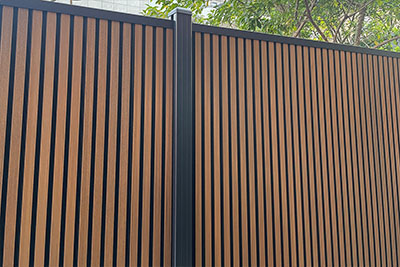
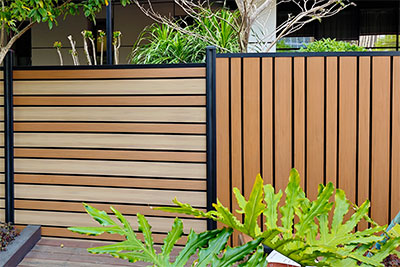
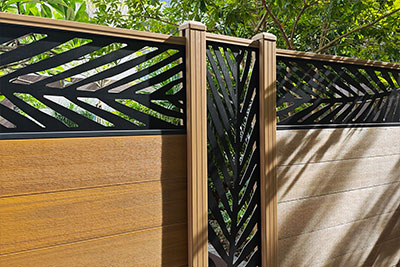
Every fence distributor in Europe is asking the same question right now: “Where is the next growth point?”
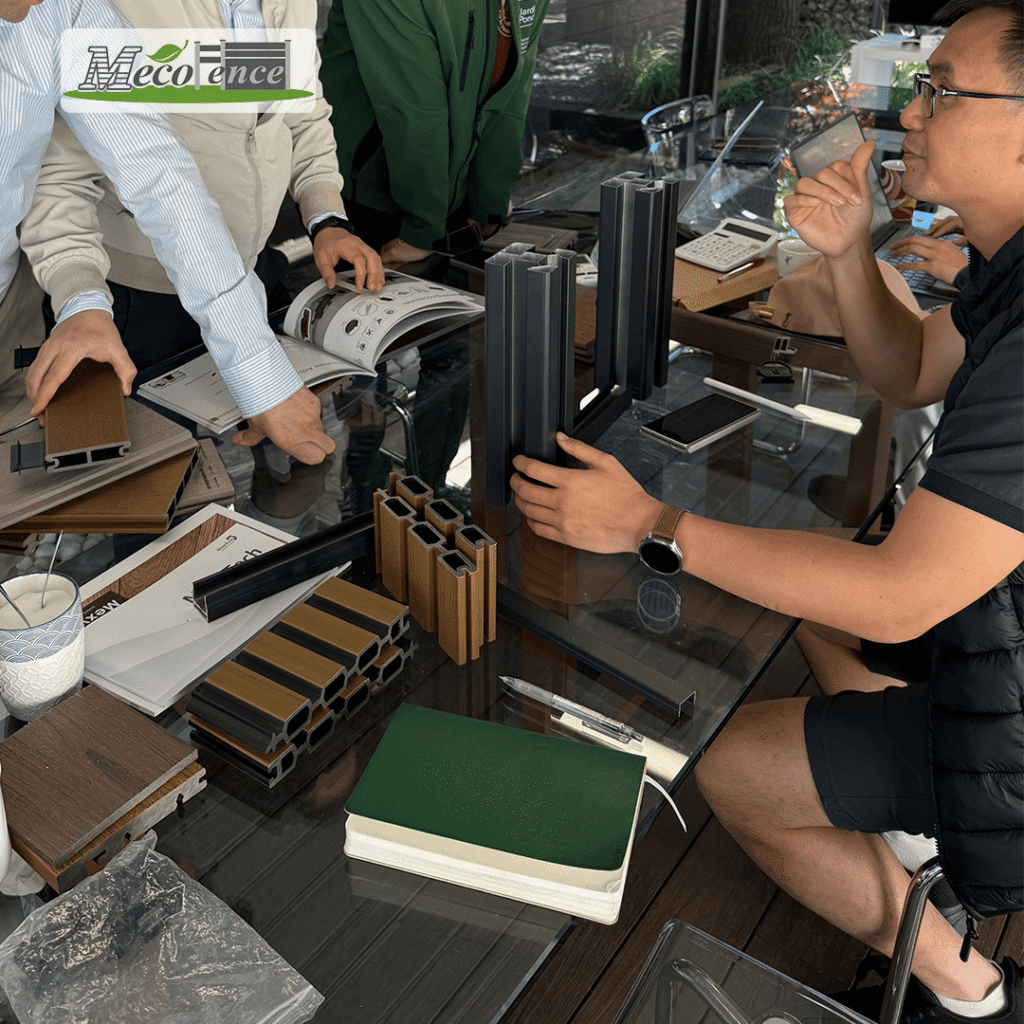
We just spent 27 days on the ground across six European countries — Italy, France, the Netherlands, Germany, Spain, and Portugal — sitting across the table from importers, brand owners, family businesses, and volume distributors. The answer came up in every single meeting.
It’s not a new marketing trick. It’s not another product line on top of a bloated catalog. The next growth point for the European composite fence market is generational product upgrading — and most distributors are still stuck selling first-generation WPC — the race-to-the-bottom product — to a market that’s already moved on.
This article maps where every major EU market sits today. It also covers the part of this business that nobody at a trade show will say out loud: why so many European distributors are quietly losing confidence in this category — and what the ones who are winning are doing differently.
Disclosure: MecoFence is a composite fence manufacturer. We have a stake in this market. We’ll share what we actually observed — including the parts that reflect badly on how this industry works.
The Real Composite Fence Europe Market Landscape (Not the Trade Show Version)
Here’s what most market reports won’t tell you: Europe is not one composite fence market. It’s at least four different markets operating at completely different maturity stages — and treating them the same is the fastest way to misallocate your inventory budget.
The overall European fencing market was valued at roughly USD $10.5 billion in 2024 and is projected to reach $15.77 billion by 2033, growing at a 4.91% CAGR. The composite segment specifically? Forecasted to hit $4.5 billion globally by 2033 at a 7% CAGR — with Europe accounting for roughly 30% of that.
But the growth isn’t evenly distributed. Not even close.
After walking through warehouses, sitting in distributor offices, and inspecting job sites from Florence to Lisbon, we’ve mapped the European composite fence market into four distinct maturity stages. Knowing which stage your market is in determines your entire product strategy.
This isn’t theory. It’s what we observed in our 2026 European business trip — meetings, site visits, and frank conversations across the continent.
| Stage | Market Characteristics | Countries | Dominant Product |
|---|---|---|---|
| Stage 1: Pre-Market | Composite fencing is barely known. Timber, metal, and basic PVC dominate. Buyers have never seen a WPC fence installed. | Portugal, Spain (interior) | None / basic 1st-gen flat boards |
| Stage 2: Early Adoption | First-generation PE composite fencing is entering the market. Led by local brands. Most posts are locally-sourced aluminium. Product quality varies wildly. | France, Italy, Spain (coastal) | 1st-gen PE flat board fences |
| Stage 3: Market Transition | First-gen is established but quality limitations are becoming obvious. Early adopters are exploring 2nd-gen co-extrusion. Head brands are leading the shift. | UK, Netherlands, Germany | 1st-gen → 2nd-gen transition |
| Stage 4: Mature Innovation | 2nd-gen co-extrusion is mainstream. Competition shifts from price to design differentiation, fire rating, and system completeness. | UK (top tier), Nordics | Co-extrusion + architectural profiles |
Why does this matter for you as a distributor?
Because the profit window sits between stages. If you’re selling first-gen products into a Stage 3 market, you’re already competing on price alone — and losing. If you’re bringing second-gen products into a Stage 2 market before your competitors, you’re the one setting the premium.
That’s where the growth is.
Country-by-Country: What We Saw on the Ground
France — Stage 2, Rising Fast
France surprised us. The market is still largely first-generation PE composite fencing — thin boards, flat profiles, basic designs led by brands like Fiberdeck and Silvadec. The typical French WPC fence today looks like what the UK was selling five years ago: narrow slats, printed textures, and locally-sourced aluminium posts.
But here’s the opportunity: France has strong import infrastructure. Large importers. Established channel partners. Sophisticated retail distribution. The product is behind the curve, but the logistics network is mature.
A French distributor with access to second-generation co-extrusion panels — 24mm boards, 3D profiles, architectural aesthetics — would be operating in a near-zero-competition zone for premium composite fencing. The market is ready. The product just hasn’t arrived yet.
UK — Stage 3/4, Leading the Transition
The UK is the most advanced composite fence market in Europe. First-gen products are still selling — some very well — but the market is actively aware of the quality limitations. Fading. Flexing. Warping after 3-4 winters.
Head brands are already driving the shift to second-generation co-extrusion composite fencing. Innovation and differentiation are the core values of the top performers. And everyone else? They’re watching.
Two UK-specific factors that matter:
- Fire rating is becoming a gatekeeper. EN 13501 Class B/C is standard for commercial projects. For high-rise buildings, the requirement jumps to A2 — a bar that eliminates most WPC products entirely.
- Distributors who found reliable suppliers and upgraded to 2nd-gen early have built stable, profitable sales networks. Those still selling first-gen on price are trapped in a downward spiral.
Italy — Stage 2, Slow but Deep
Italy moves at its own pace. The only major composite-focused brand with real market presence is Deco. Composite fencing is still in the early stages — but the Italian market rewards quality and design over speed and volume.
Northern Italy (Bologna, Padova, Bergamo) is commercial territory: logistics parks, industrial campuses, gated communities. These buyers demand CE marking, UV test data, and reliable lead times. Southern and central Italy is residential and design-focused — Tuscan homeowners want fences that disappear into the garden.
For distributors willing to invest in long-term relationships, Italy’s slow pace is an advantage: fewer competitors, higher loyalty, and real appreciation for premium products with architectural depth like fluted and dual-tone composite fence panels.
Spain & Portugal — Stage 1-2, Maximum Greenfield Opportunity
Spain’s composite fence market is extremely early-stage. What exists is mostly flat, first-generation boards — the simplest possible product. Portuguese composite is slightly more advanced, led by Mausa, but fencing specifically is still at the very beginning.
But consider the context: Spanish construction is forecasting 2.5% growth in 2026, building permits are surging, and the Mediterranean climate — extreme UV, salt air, temperatures hitting 45°C — destroys traditional fencing materials within a few years. Timber rots. Cheap WPC fades and warps.
A distributor who enters Iberia now with a complete second-generation system — including co-extrusion panels tested for coastal conditions, aluminium posts, and matching gates — isn’t just selling a product. They’re defining the category.
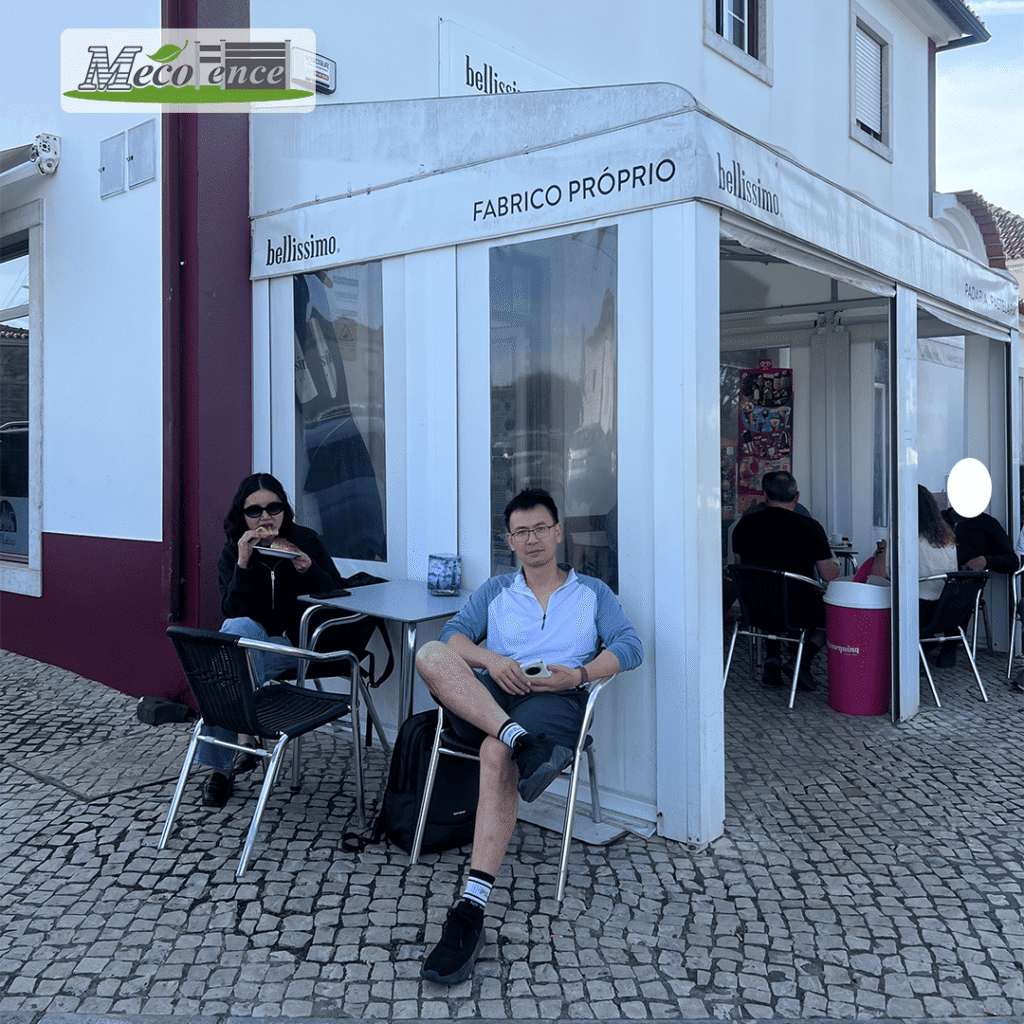
The Real Reason Distributor Confidence Is Eroding Across Europe
Here’s the uncomfortable part. And it applies to almost every market we visited.
Across six countries, distributors from very different backgrounds told us some version of the same thing: “This business is getting harder. Margins are smaller. We can’t differentiate.”
They’re right. But the reason isn’t just competition. The root cause is an information asymmetry problem built into how this industry distributes.
Here’s how the typical European WPC fence supply chain works:
Factory → Brand Owner → Authorized Agent → Sub-Distributor → Retailer / Contractor → End Customer
Every layer adds a margin. Every layer also adds a delay and a filter on information. A factory launches a new fluted co-extrusion profile. By the time that information passes through agent → sub-distributor → sales team → the owner who makes stocking decisions, six to twelve months have passed — and the message has been diluted to nothing.
The distributor sitting at the end of that chain is selling products they don’t fully understand, at margins that don’t make sense, competing against importers who bought the same factory’s product 20% cheaper without any agent in between. They haven’t failed. They’ve been failed by the chain above them.
There’s a second layer to this problem: some agents are excellent; some are one-person offices forwarding emails. The brand owner doesn’t always know (or care) which one they’ve appointed. And the distributor, who carries the actual inventory risk, carries the consequence either way.
The distributors who are genuinely winning in Stage 3 and 4 markets have figured out the same thing independently: shorten the chain, upgrade the product, and own the story. That sequence — in that order — is what separates growing businesses from stagnating ones.
5 Types of European WPC Fence Distributors — Which One Are You?
Across six countries and dozens of meetings, we identified five distinct distributor profiles. Each faces a different version of the same question: Where’s the next growth point?
| Type | Who They Are | Their Bottleneck | What Growth Actually Looks Like |
|---|---|---|---|
| The Transitioner | Family timber business pivoting to composite | Needs complete system education — new product category, new selling story, new installation training | First container sells out faster than expected because timber clients were already ready to upgrade |
| The Diversifier | Sells other building products, adding WPC fencing as a new line | Doesn’t want SKU complexity — needs a modular, simple system that sales staff can learn in a day | WPC fencing becomes the highest-margin SKU in their portfolio within 18 months |
| The Grower | Already sells WPC successfully, but with basic 1st-gen products. Facing margin squeeze. | Selling the same product as six competitors — needs differentiation that justifies a 30–40% premium | Co-extrusion upgrade repositions them as the premium option; price wars become irrelevant |
| The Volume King | High volume, low price — dominates the budget segment | Margin per unit approaching zero. One bad season or one cheaper competitor threatens the whole operation. | A premium tier protects the core business — volume continues, but a growing share comes at better margins |
| The Brand Leader | Top-tier WPC brand. Sets the benchmark in their market. | Needs a supply partner who can keep pace with their product development — not one who ships the same catalog every year | Co-developed exclusive profiles that nobody else in their market can source — genuine competitive moat |
Notice the common thread? Every type needs to move upmarket. Not because it’s fashionable — because the economics of staying in place are getting worse every year.
Why Second-Generation Composite Fencing Changes the Economics for EU Distributors
If you’re still unclear on the difference between first-gen and second-gen WPC fencing, here’s the short version (for the full technical breakdown, read our co-extrusion vs traditional WPC guide):
| Attribute | 1st-Gen (Uncapped WPC) | 2nd-Gen (Co-Extrusion) |
|---|---|---|
| Board Thickness | Typically 12–18mm | 24mm professional grade |
| Surface Protection | Surface-printed texture (fades in 2–4 years) | 360° co-extruded cap layer (ASA/PE) |
| UV & Weather Resistance | Visible fading, moisture absorption | Minimal fading, sealed from moisture |
| Design Options | Flat boards only | Fluted, dual-tone, slat wall, louvered, carving |
| Wind Resistance | Often untested or unrated | Beaufort Level 9 (Intertek tested) |
| Warranty | 3–10 years | 15–20 years |
| Callback Risk | High — fading, warping, flexing | Near zero with correct installation |
| Margin Potential | Declining — commoditized price competition | Premium positioning with defensible margin |
Here’s the margin reality. A second-generation co-extrusion panel commands a 30–50% retail premium over a comparable first-gen board in most European markets — because the design, the certifications, and the longevity story genuinely justify it to end customers. Your FOB cost increase from a quality factory is typically 15–20% over first-gen. The maths works — if you’re selling into the right market stage with the right product story.
Fewer callbacks is also a number. Every warranty return or site visit to fix a warped fence costs time, transport, and contractor goodwill. Second-gen panels eliminate most of that. Your after-sales cost drops. Your reputation improves. Your referrals increase. These are real line items — they just don’t show up in the per-unit FOB comparison.
For current wholesale FOB pricing, container math, and landed cost calculations for the EU, see our WPC fence wholesale pricing guide.
EU Compliance: The Certifications Every Composite Fence Distributor Needs in 2026
Here’s what we heard consistently across every European market: certifications are table stakes now, not differentiators. Without them, you don’t get past the first conversation.
| Certification | What It Covers | EU Requirement Level |
|---|---|---|
| CE Marking | Product safety and performance declaration | Mandatory for EU market access |
| FSC Certification | Responsible wood fibre sourcing | Required by many EU distributors & government tenders |
| REACH Compliance | Chemical safety (no harmful substances) | Mandatory for all products sold in the EU |
| EN 13501 Fire Rating | Reaction to fire classification | B/C class common for commercial. A2 for high-rise. |
| EUDR (Dec 2026) | Deforestation-free supply chain proof | Enforcement starts 30 December 2026 for large operators |
MecoFence holds CE, ISO 9001, FSC, SGS, Intertek, and REACH certifications. For EU-specific surface treatment specifications and fire testing requirements, we work with each distributor to match their market’s standards. See the live regulatory details below.
EU Regulatory Watch — 2026
Two live regulatory risks every WPC fence importer must track right now
The EU Deforestation Regulation (Regulation EU 2023/1115) requires that any product containing wood fibre placed on the EU market must be proven deforestation-free — traced via GPS geolocation coordinates back to the exact forest plot of origin, with a reference cut-off date of 31 December 2020. WPC composite fencing contains 55–70% wood fibre. It is in scope.
Suppliers without FSC chain-of-custody certification or documented due diligence statements face cargo seizure and penalties up to 4% of EU annual turnover. This is the #1 compliance risk for European WPC fence importers right now. Large and medium operators must comply by 30 December 2026. Small and micro operators have until 30 June 2027.
Act now: Confirm your supplier holds FSC CoC certification and can provide full wood fibre geolocation data. Request their EUDR due diligence statement before your next container order.
↗ Official Source: European Commission — EUDR Regulation PageOn 14 July 2025, the European Commission imposed definitive anti-dumping duties of 21.3% to 36.1% on multilayered wood flooring imports from China (Implementing Regulation EU 2025/1342). The duties target products under CN code 4418 75 00 — assembled/engineered parquet flooring.
WPC composite fencing is classified under HS code 3925.90 and is not subject to these duties.
HS 3925.90 — WPC Fencing ✓ Safe
CN 4418 75 00 — Wood Flooring ✗ Duties Apply
However, EU customs classifications can shift as regulators scrutinise wood-content products more closely. A reclassification event would trigger significant tariff exposure overnight. Monitor any new CN code guidance for WPC products closely throughout 2026.
↗ Official Source: EC Trade — Anti-Dumping on Wood Flooring (14 Jul 2025)The 2026 Playbook: How to Capture Composite Fence Growth in Your EU Market
Based on everything we learned in April — the market stages, the channel problems, the distributor profiles — here’s the action framework that we believe works across all four stages.
Step 1: Identify Your Market’s Stage
Use the 4-stage framework above. Be honest about where you sit. A Stage 2 market doesn’t need seven profiles and a 40-page catalog. It needs one strong system, properly demonstrated, with clear installation guidance.
Step 2: Upgrade Your Product — Don’t Just Add to It
The mistake we see repeatedly: distributors add a premium composite line on top of their existing first-gen range and hope someone notices. That’s not a product strategy. That’s inventory bloat.
The distributors winning in Stage 3 and 4 markets made a decisive switch. They phased out first-gen, trained their sales team on the upgrade story, and led with second-generation composite fence systems as the new standard — not an upsell option.
Step 3: Shorten Your Supply Chain
If you’re buying through two intermediaries before the product reaches your warehouse, you’re paying for their margins — not yours.
Work directly with the manufacturer. You want access to:
- Factory-direct pricing — not agent pricing with 15-20% added on top
- Real-time product information — new profiles, new colours, new certifications the moment they’re available
- OEM/ODM capability — your brand, your packaging, your exclusive designs
- Marketing support — high-res images, brochures, installation videos, ready-to-use content
Step 4: Lead With Education, Not Just Product
In Stage 1-2 markets, your biggest competitor isn’t another composite brand. It’s ignorance. Contractors who’ve never installed WPC. Homeowners who’ve never heard of it. Architects who default to timber because they’ve always specified timber.
The distributors building the strongest businesses in France, Italy, Spain, and Portugal aren’t just shipping boards. They’re running live installation demos, providing technical data sheets in the local language, and equipping contractors with comparison tools that make composite fencing an easy sell over timber.
Step 5: Get Your EUDR Compliance Locked In — Now
December 2026 is closer than you think. Confirm your supplier has FSC chain-of-custody certification, geolocation data for wood fibre sourcing, and a documented due diligence process. This isn’t optional — it’s a condition of continued EU market access for WPC products.
The Growth Is There. The Question Is Whether You Move First.
After 27 days, 6 countries, and dozens of conversations with European distributors, the picture is clear: the composite fence Europe market is at an inflection point.
Stage 1 and 2 markets are wide open for distributors with the right product and the right story. Stage 3 markets are actively looking for reliable second-generation supply partners. Stage 4 markets reward innovation and design leadership.
Every type of distributor we met — from the family timber business discovering WPC for the first time to the top-tier brand owner leading the market — is asking the same question: Where is the next growth point?
The answer is second-generation composite fencing. And the window to lead — rather than follow — is right now.
Frequently Asked Questions
At minimum, you need CE marking, REACH compliance, and FSC certification. For commercial projects, fire classification under EN 13501 (typically Class B or C) is increasingly required. And from 30 December 2026, the EU Deforestation Regulation (EUDR) will require documented proof that wood fibre in WPC products is deforestation-free, traceable to the source plot.
First-generation WPC fencing uses surface-printed textures on thinner boards (12–18mm) — these fade, warp, and absorb moisture within a few years. Second-generation uses co-extrusion technology: a polymer cap layer is extruded around the core, creating a sealed, 360° protected board at 24mm thickness with dramatically better UV resistance, durability, and architectural design options.
Based on our 2026 field research, France, Spain, and Portugal offer the highest greenfield opportunity — composite fencing is still in early adoption with limited premium product available. The UK and Germany are in active transition from first-gen to second-gen, creating strong upgrade demand. Italy moves slowly but rewards quality with high distributor loyalty.
WPC composite fencing contains 55–70% wood fibre, placing it firmly within scope of the EU Deforestation Regulation (EUDR). Large and medium operators must prove deforestation-free sourcing — with GPS geolocation data back to the forest plot of origin — by 30 December 2026. Suppliers without FSC chain-of-custody certification face cargo seizure and fines up to 4% of EU turnover. Verify your supplier's documentation now.
MecoFence's MOQ starts at 100 sets of 6ft × 6ft panels, with a full container load typically at 200 sets. Factory-direct FOB pricing for co-extrusion systems is significantly lower than locally-sourced European equivalents — see our WPC fence wholesale pricing guide for current FOB, shipping, and landed cost calculations.

Written by
Steven He
Co-Founder & Head of Product · MecoFence
Steven leads product development and B2B partnerships at MecoFence, a WPC composite fence manufacturer based in Guangdong, China. 10+ years in composite material manufacturing, covering formulation, extrusion process engineering, and export supply chain.
Table of Contents
Planning Your Next Container for the EU Market?
MecoFence supplies co-extrusion composite fence systems direct from our Foshan factory — CE, FSC, REACH certified — with full OEM/ODM support, free samples, and a dedicated EU account manager. Whether you're entering the market or upgrading your range, we'll build a product and pricing plan for your specific country.
Request Your EU Market Sample Kit →