
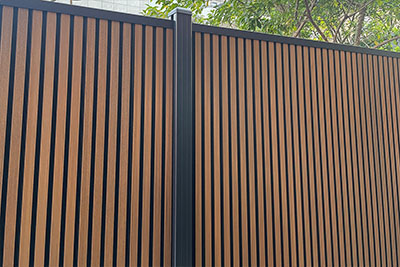
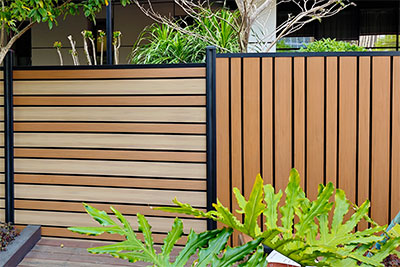
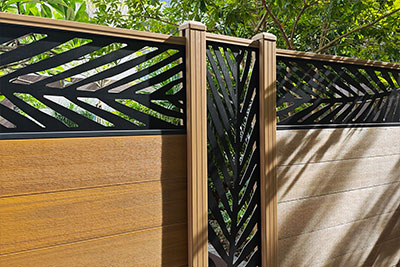
A garden boundary does not always need to behave like a wall.
For this Canadian project, the goal was a composite trellis fence that could define the growing area, add an orderly architectural line, and still let the garden feel open. That is a very different brief from a full-privacy fence. Full stop.
Project note: this case study describes the visible design and the project workflow shared with MecoFence. Final fence height, spacing, foundations, and local requirements must always be confirmed for the individual site.
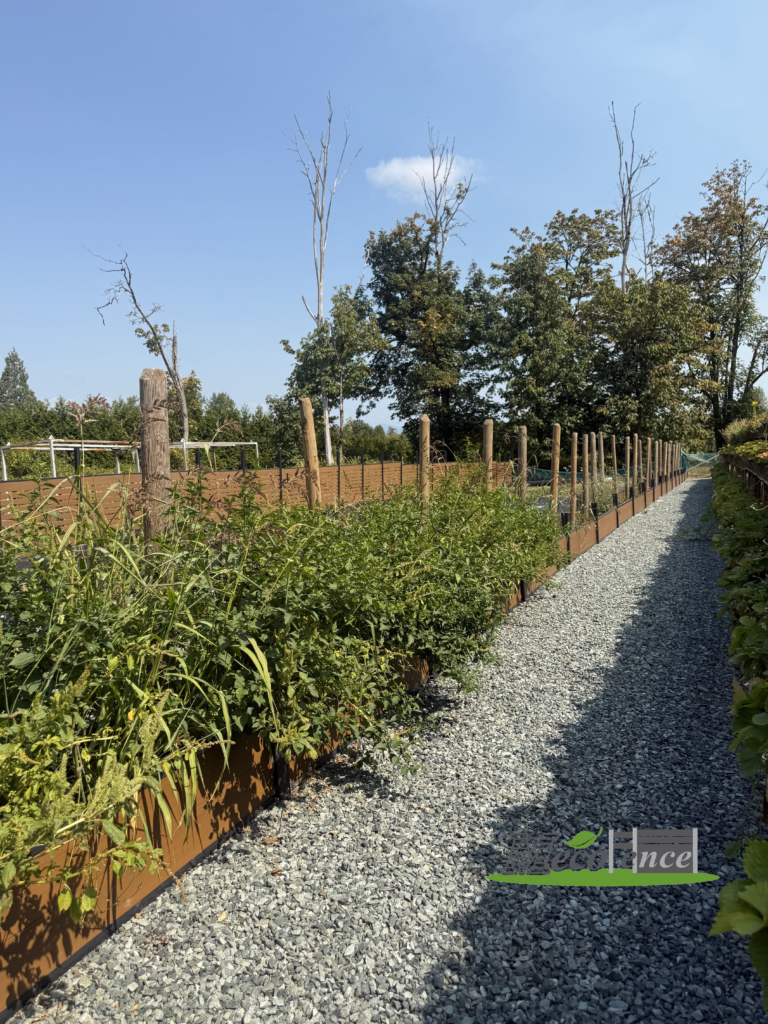
The Brief: Define the Garden Without Closing It In
The end customer approached a local dealer or installation partner looking for a better way to organize a garden and outdoor growing area. The brief was not “give us a solid screen.” It was “give this space a clearer edge without losing its connection to the landscape.”
That distinction changes the design conversation.
- Boundary: make the garden area read as a purposeful zone.
- Openness: retain visual connection through the horizontal slats.
- Landscape fit: avoid a heavy, closed look beside planting beds and paths.
The local partner selected and installed the fence system for the garden project. MecoFence’s role was to supply the product system and maintain communication with the partner; the local dealer or contractor remained responsible for customer communication, final site decisions, and installation.
The completed project uses a horizontal slatted trellis design in a warm brown finish with dark posts. The repeated horizontal lines echo the planting beds and carry the eye across the site instead of stopping it cold.
Think of it as a picture frame for the garden, not a blackout curtain.
| Visible design element | Role in this project |
|---|---|
| Horizontal slats | Create an elongated, contemporary line around the garden. |
| Open spacing | Preserves a more open visual relationship with the surrounding landscape. |
| Brown boards + dark posts | Adds contrast beside greenery, gravel, and raised planting areas. |
If you are specifying a similar system, start with the Premium Slat Composite Fence Panel and have the local project team confirm the final configuration for the site. The system should fit the site, not the other way around.
Why This Is a Trellis Design — Not a Privacy Fence
Calling every outdoor boundary a privacy fence is an easy SEO shortcut. It is also the wrong promise for this project.
A WPC trellis or slatted garden fence is designed to define space, add visual rhythm, and allow a more open outdoor setting. The level of screening depends on the final height, board spacing, viewing angle, and site layout.
What the trellis design does well
- Separates a garden, patio, or planting zone from adjacent areas.
- Creates a modern backdrop for greenery and raised beds.
- Keeps the composition lighter than a solid panel enclosure.
Need a different visual direction? MecoFence also offers a horizontal slat composite fence panel range for project-specific configurations.
What This Real Project Can — and Cannot — Tell You
A completed project is valuable because it lets you see the visual relationship between the fence, planting beds, pathways, and the wider landscape. It is a practical reference for dealers and contractors discussing a similar style with their own customers.
It is not a substitute for site-specific design or installation advice. Every project still needs the local partner to confirm dimensions, post locations, foundations, gates, local requirements, and the final suitability of the system.
That is the honest value of a case study: it gives you a better starting point for a conversation, not a one-size-fits-all promise.
A Practical Planning Playbook for a WPC Garden Fence
A handsome photo is not a specification. Before a dealer, contractor, or project buyer orders horizontal fence panels, these are the questions that matter.
- What is the boundary supposed to do? Garden zoning, decorative edging, partial screening, or a backdrop for planting each leads to a different layout.
- How open should the slats be? Board spacing affects the visual openness of the finished trellis design.
- Where are the posts, corners, and access points? Plan the run before choosing panels; a gate or tool-access opening changes the rhythm of the system.
- What is underfoot? Soil, gravel, a slope, and existing hardscape require different installation planning.
- What should the fence sit beside? Bring photos of the planting, paving, façade, and adjacent structures when discussing color samples.
For the installation conversation, start with MecoFence’s composite fencing installation guide, then confirm the final fixing method with the local installer and applicable local requirements.
The Finished Garden Boundary
The finished project shows why a trellis approach can be useful in a planted setting: the fence gives the garden a clean perimeter while allowing the vegetables, beds, paths, and trees to remain part of one larger outdoor scene.


Project takeaway: the best garden boundary does not compete with the planting. It gives the planting a stronger stage.
From Project Feedback to Better Local Support
During a customer visit in Canada, the MecoFence team revisited this completed project with the local partner. Seeing a finished installation in its real landscape tells us more than a catalog image ever can.
The visit was an opportunity to listen to project feedback and understand what local partners may need for future garden-boundary projects. It was not a site inspection or a replacement for the contractor’s own project responsibility.

Why We Plan North American Customer Visits Each Year
This project follow-up was part of MecoFence’s planned North American customer-visit program. Each year, our team schedules market visits to meet local dealers, contractors, and long-term customers in person.
These visits help us see completed projects in their real settings, understand installation feedback, and learn what local partners need for upcoming fence and garden-boundary projects.
For us, support does not end when materials are delivered. The field is where the next better recommendation starts.
Playbook: Sourcing a Composite Fence for a Tough Climate
Buying for a humid, high-UV, windy site — or for resale into one? Use this checklist before you order.
- Demand 360° co-extrusion on boards — a single-side cap leaves the back open to moisture.
- Choose solid-core WPC posts over hollow — internal reinforcement resists flex under wind.
- Check certifications — ISO 9001, ASTM E84, REACH and SGS/Intertek reports clear customs and reassure buyers.
- Confirm complete kits — color-matched post, board, brackets, base and cap, so a local crew can install without you.
- Leave expansion gaps — composite moves with temperature; honor the spec’d clearances.
- Plan slopes early — decide stepped vs. raked panels before posts go in.
Get those six right and a composite fence will outlive most things on the property. New to the category? Start with our pillar guide: what is composite fencing.
Written by
Steven He
Co-Founder & Head of Product · MecoFence
Steven leads product development and B2B partnerships at MecoFence, a WPC composite fence manufacturer based in Guangdong, China. 10+ years in composite material manufacturing, covering formulation, extrusion process engineering, and export supply chain.
Frequently Asked Questions
A composite trellis fence is an open or slatted boundary design used to define outdoor areas and add visual structure. Its level of screening depends on the final board spacing, height, viewing angle, and site layout.
No. This project uses a trellis-style, open slatted design, not a solid full-privacy enclosure. It is intended to create a clear garden boundary while retaining a more open visual setting.
Prepare site photos, approximate dimensions, desired height, intended use, color preference, and any gate or corner requirements. These details help the local partner and MecoFence discuss a suitable configuration.
Yes. Horizontal fence panels can be configured as a garden boundary when the layout, post locations, access, ground conditions, and desired openness are planned for the site.
No. It is a visual project reference. The local dealer, contractor, or project team should confirm all site-specific dimensions, foundations, gate details, installation methods, and applicable requirements before ordering or installing a system.
MecoFence works with local dealers and contractors on product and design discussions. The local installation partner should confirm the final site conditions, installation method, and applicable requirements.
Table of Contents
Planning a Garden Trellis Project?
If you are a dealer, contractor, or project buyer planning a garden boundary, send us the project location, dimensions, desired openness, color preference, and a few site photos. We can begin with samples and a configuration discussion.
Designing a Composite Trellis Fence for Your Next Garden Project?
MecoFence supports dealers and contractors with product samples and configuration discussions for garden-boundary projects.
Request Trellis Fence Samples →


