
It’s 2026. The composite fencing market has evolved.
Let’s be honest. Five years ago, your customers were just happy to have a fence that wasn’t rotting wood. They looked at the color, picked “Grey” or “Brown,” and that was it.
But as we head into this new building season, the game has changed. Homeowners and developers are smarter. They are touching the samples. They are asking about “plastic feel” versus “natural grain.”
In 2026, texture—the surface treatment—is the single biggest differentiator between a composite fence panel that sits in your warehouse and one that flies off the shelf.
But here’s the thing: You can’t just apply any finish to any board. The surface treatment must match the core technology of the composite fencing. Get this wrong, and you might be facing warranty claims before the year is out.
Here is how we at Mecofence are applying the latest material science to our surface finishes for the 2026 market.
The Two Core Technologies: Know Your Base
Before we talk about the finish, we have to look at the canvas.
1st Generation (Traditional Composite): This is the classic mix of wood fiber and plastic (industry standard WPC). It has no outer shell. It feels more like raw wood but is more porous.
Co-extrusion (The “Shield”): This is the modern standard for high-performance composite fencing. We wrap the core in a tough PE (Polyethylene) layer. This shield is hydrophobic (water-fearing) and highly scratch-resistant.
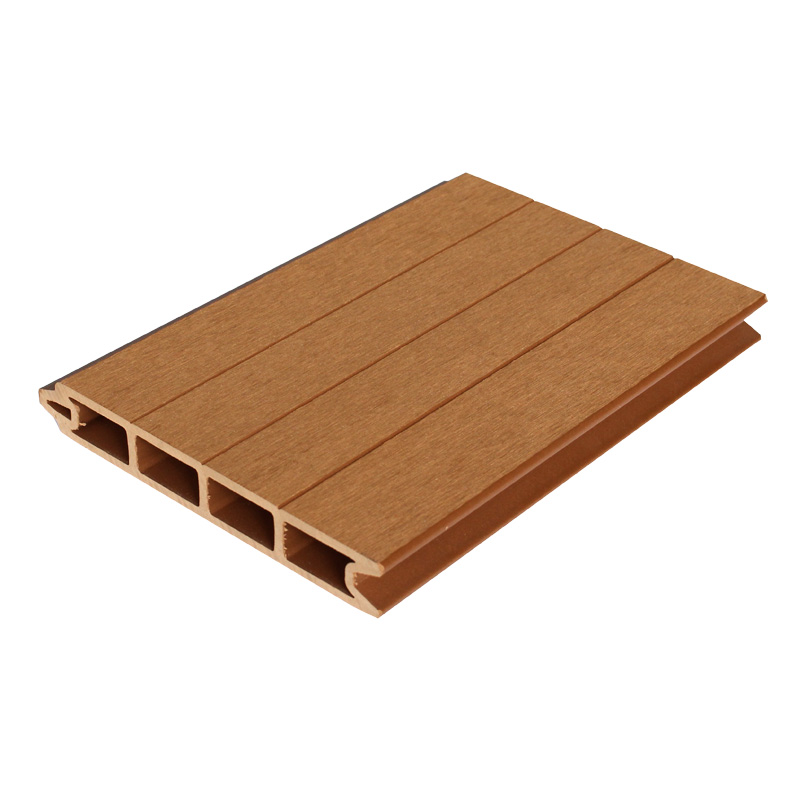 | 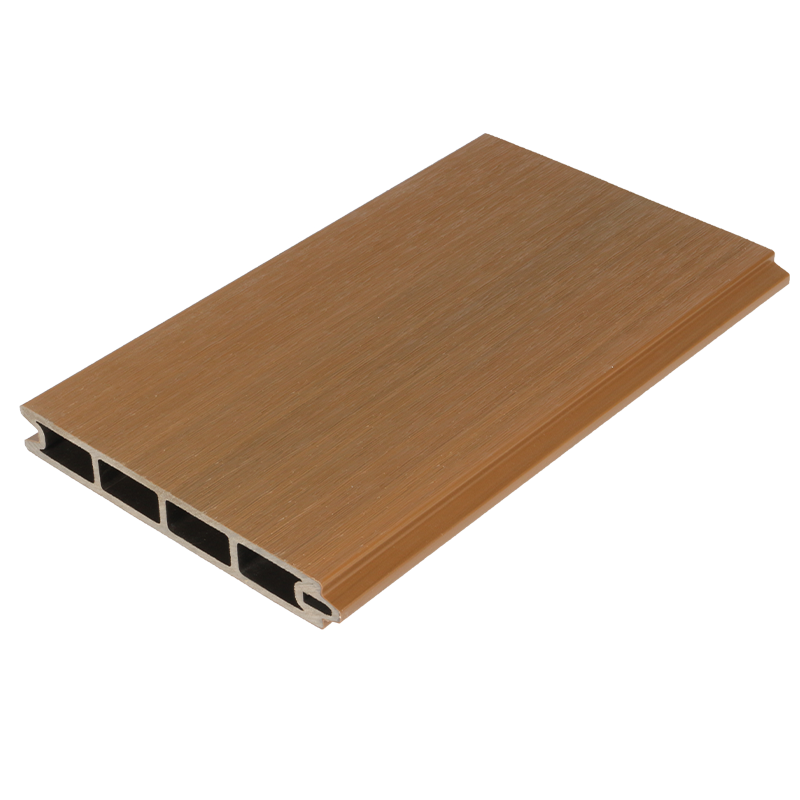 |
| 1st Composite Fencing Board | Co-extrusion Composite Fencing Board |
Surface Treatment 1: Deep 3D Embossing (The “Real Wood” Texture)
Best For: 1st Generation (Traditional) Composite Only
This is the defining feature of classic composite fencing. Because 1st Gen boards are softer and pliable under heat, we can use heavy rollers to press a Deep 3D Wood Grain into the surface.
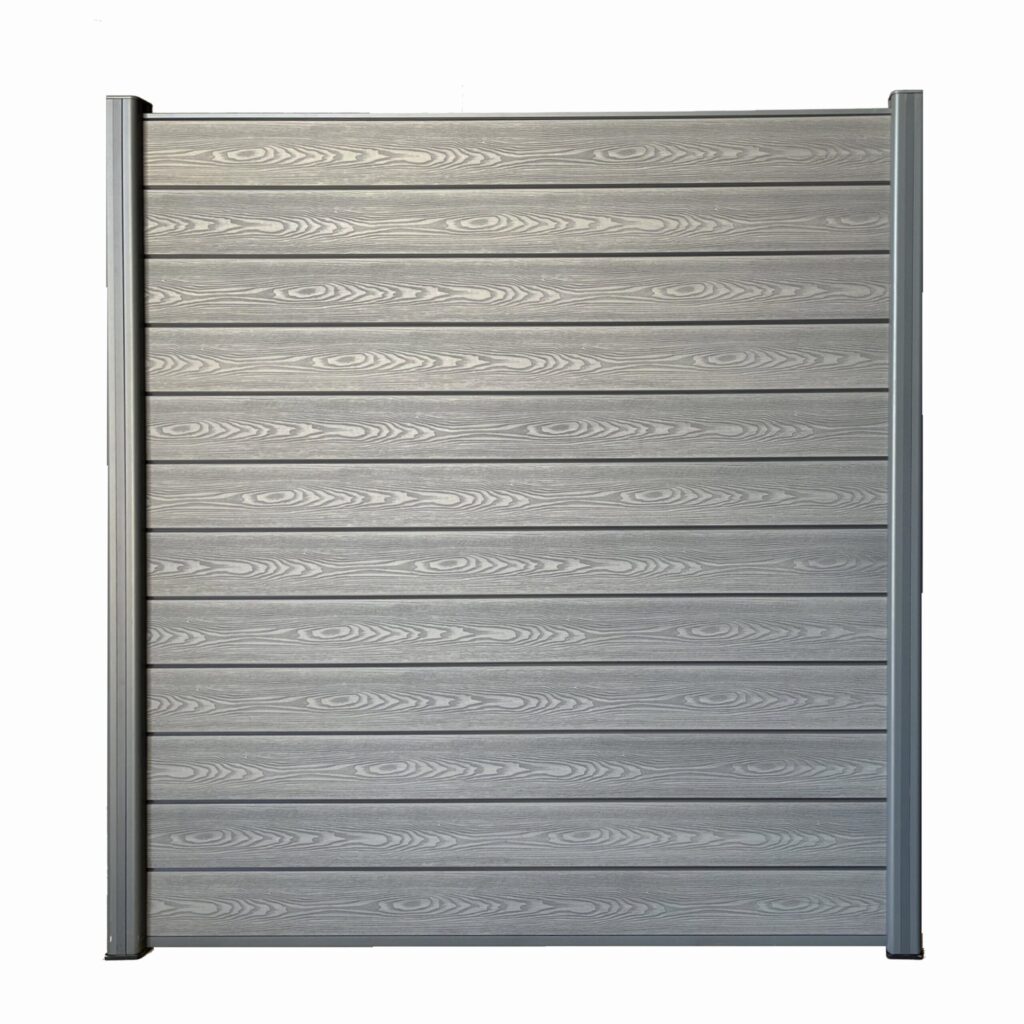
Why it wins on texture: The result is a board with physical depth—you can feel the “knots” and “grain” with your fingers.
Why NOT Co-extrusion? We generally do not apply deep 3D embossing to Co-extrusion composite fence panels. The protective PE cap is extremely hard and thin. Pressing a deep pattern into it risks cracking the shield or compromising its integrity.
Target Client: If your customer wants a rustic, traditional look that mimics rough-sawn timber, 1st Gen 3D Embossed is their absolute best option.
💡 Mecofence Insight: The Problem: End-users often complain that embossed composite boards look “fake” or “repetitive.” The Solution: For our 1st Gen series, we utilize Online Hot Embossing with random-pattern technology. This ensures the wood knots don’t repeat visibly every few feet, giving your project a natural, non-uniform look.
Surface Treatment 2: Sanding (The “Grip”)
Best For: 1st Generation (Traditional) Composite Only
Sanding involves using abrasive belts to grind the top layer of the composite boards.
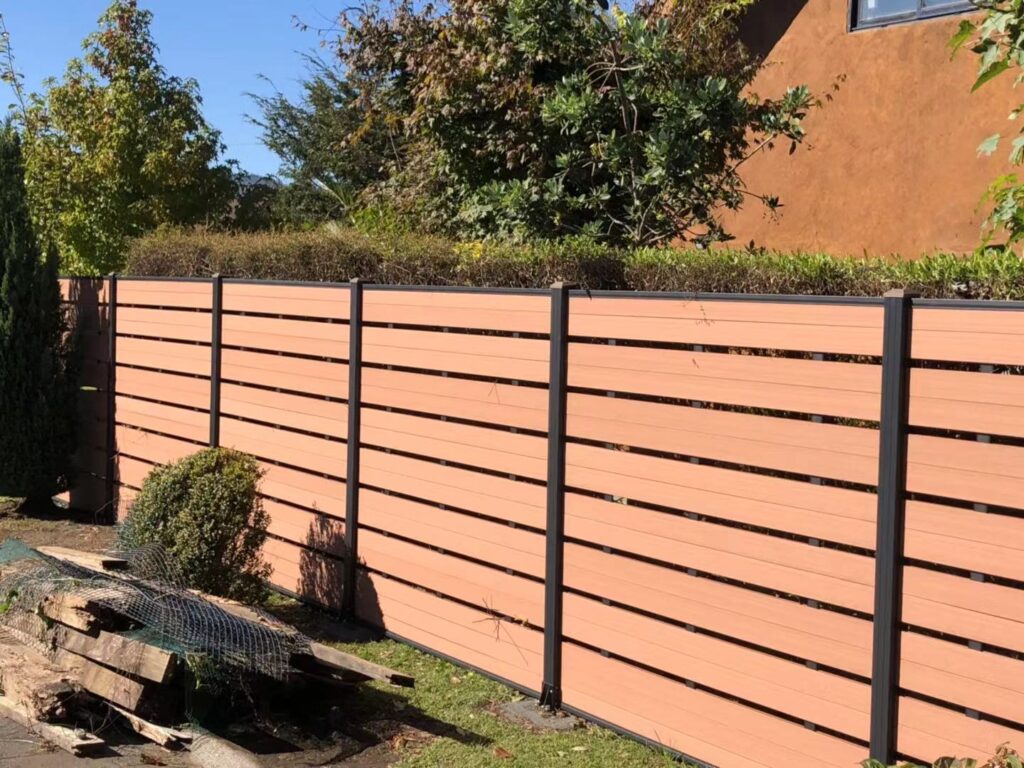
The Effect: Sanding removes the “plastic skin” formed during extrusion. It exposes the actual wood fibers within the mix, giving the fencing a matte, rustic look and excellent slip resistance.
Warning Zone: ⚠️ Never sand Co-extrusion composite fencing. Why? Because you are literally grinding away the protective shield. Once you break that seal, you lose the stain resistance and the warranty.
Surface Treatment 3: Brushing (The “Modern Matte” Finish)
Best For: Co-extrusion (Capped) Composite
This is the secret weapon for modern composite fencing.
Color Options:
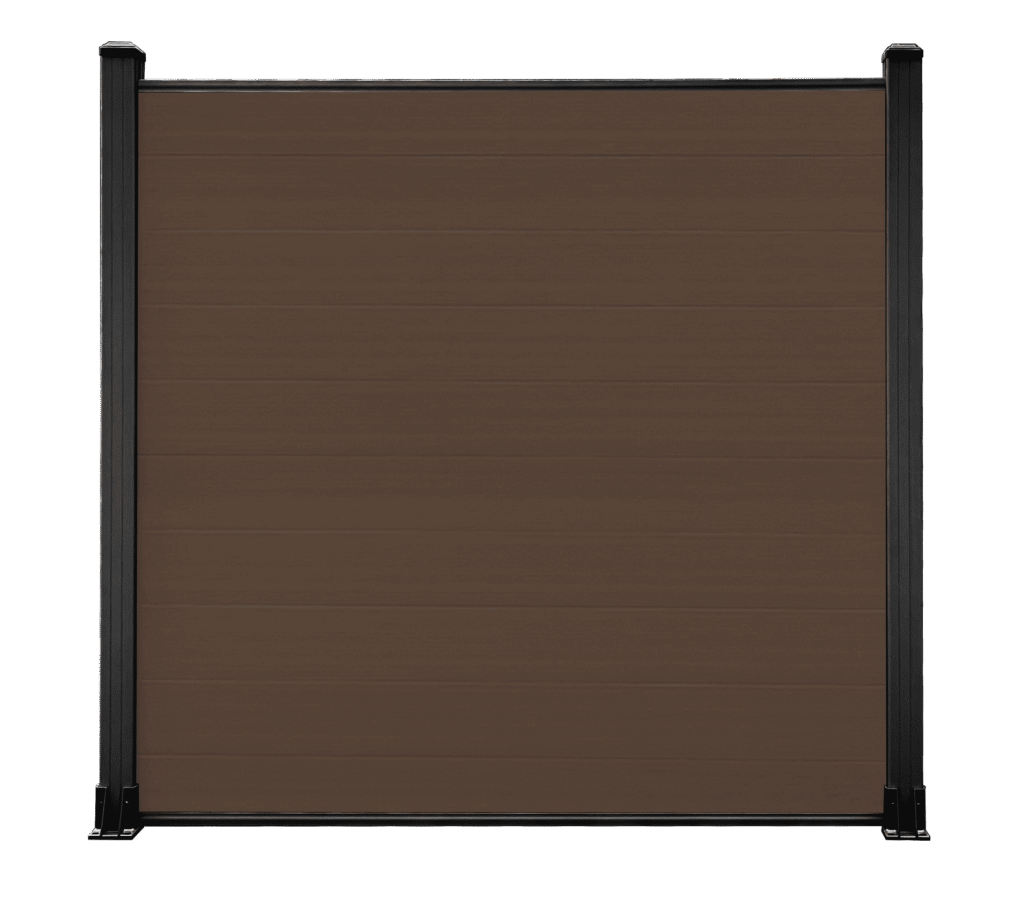 | 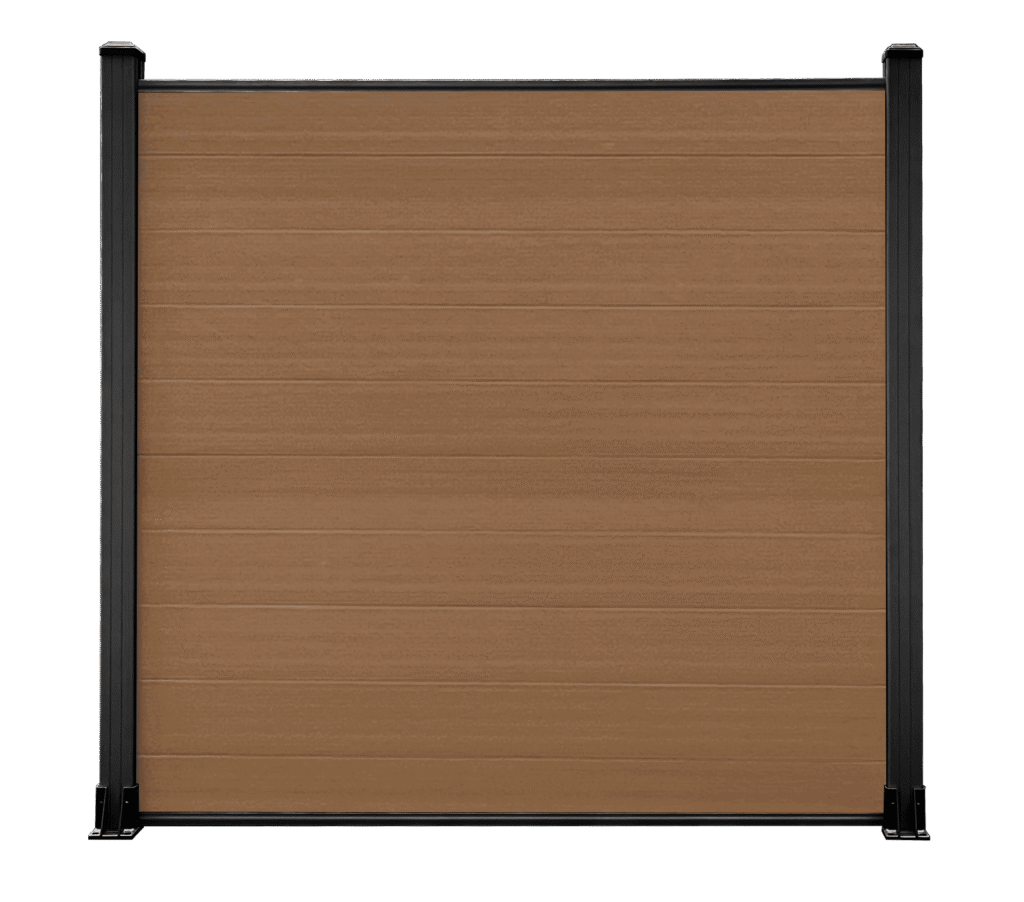 | 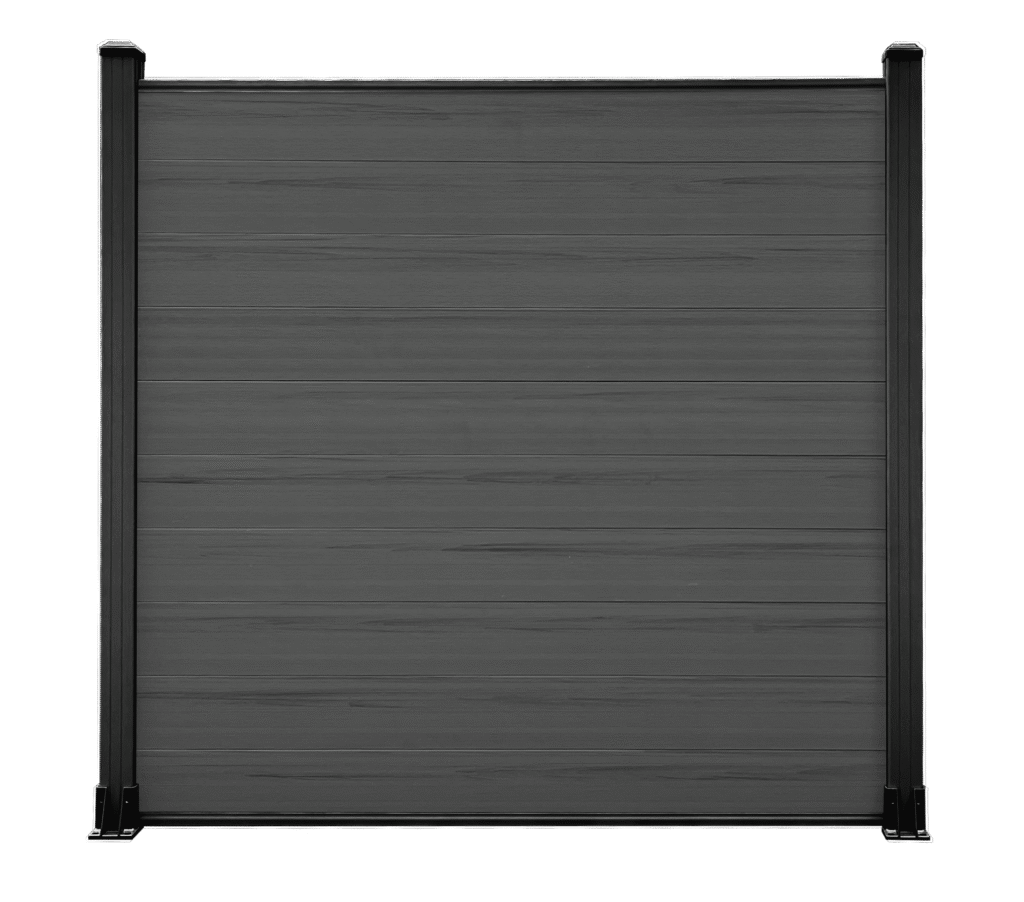 |
| IPE | Teak | Dark Grey |
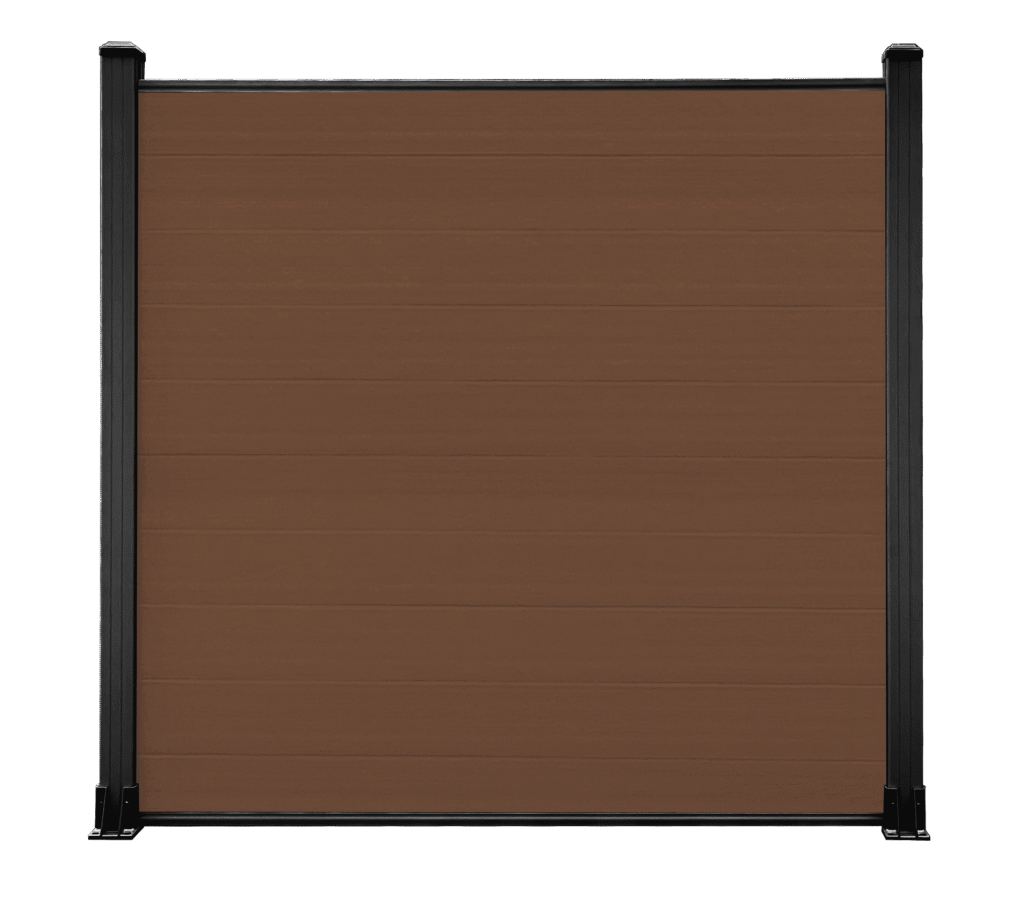 | 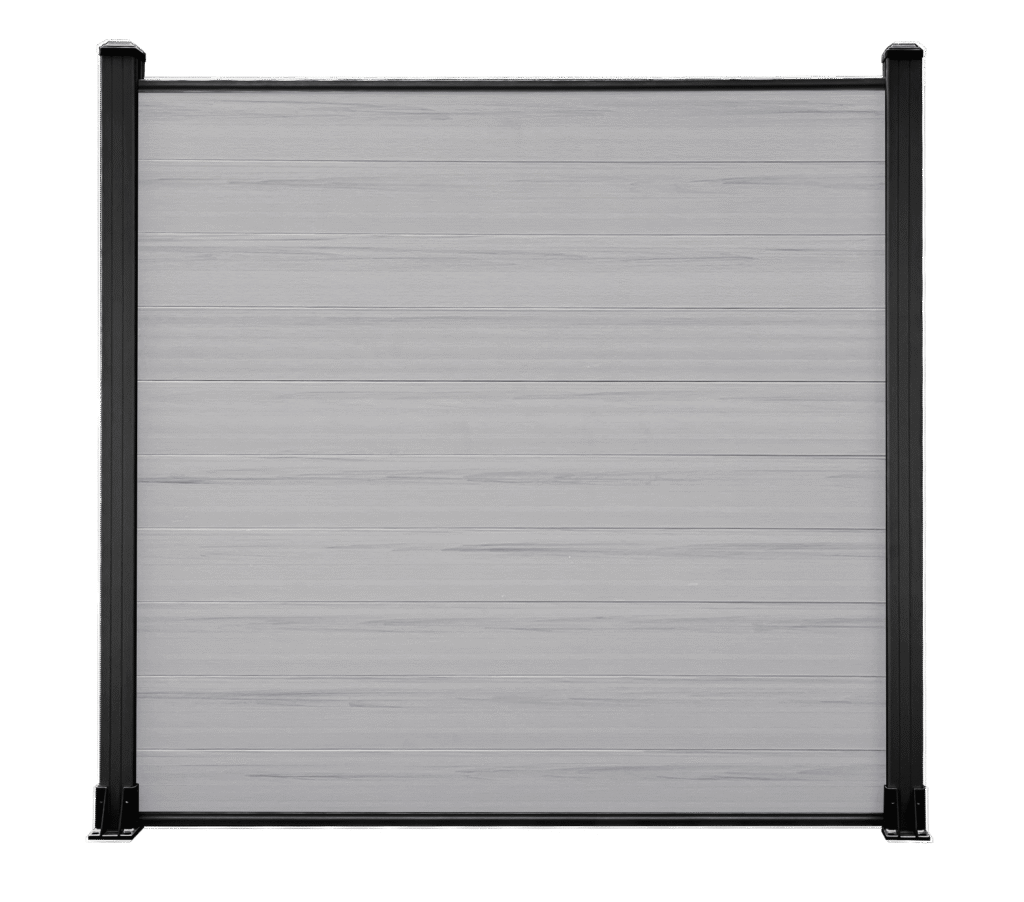 | 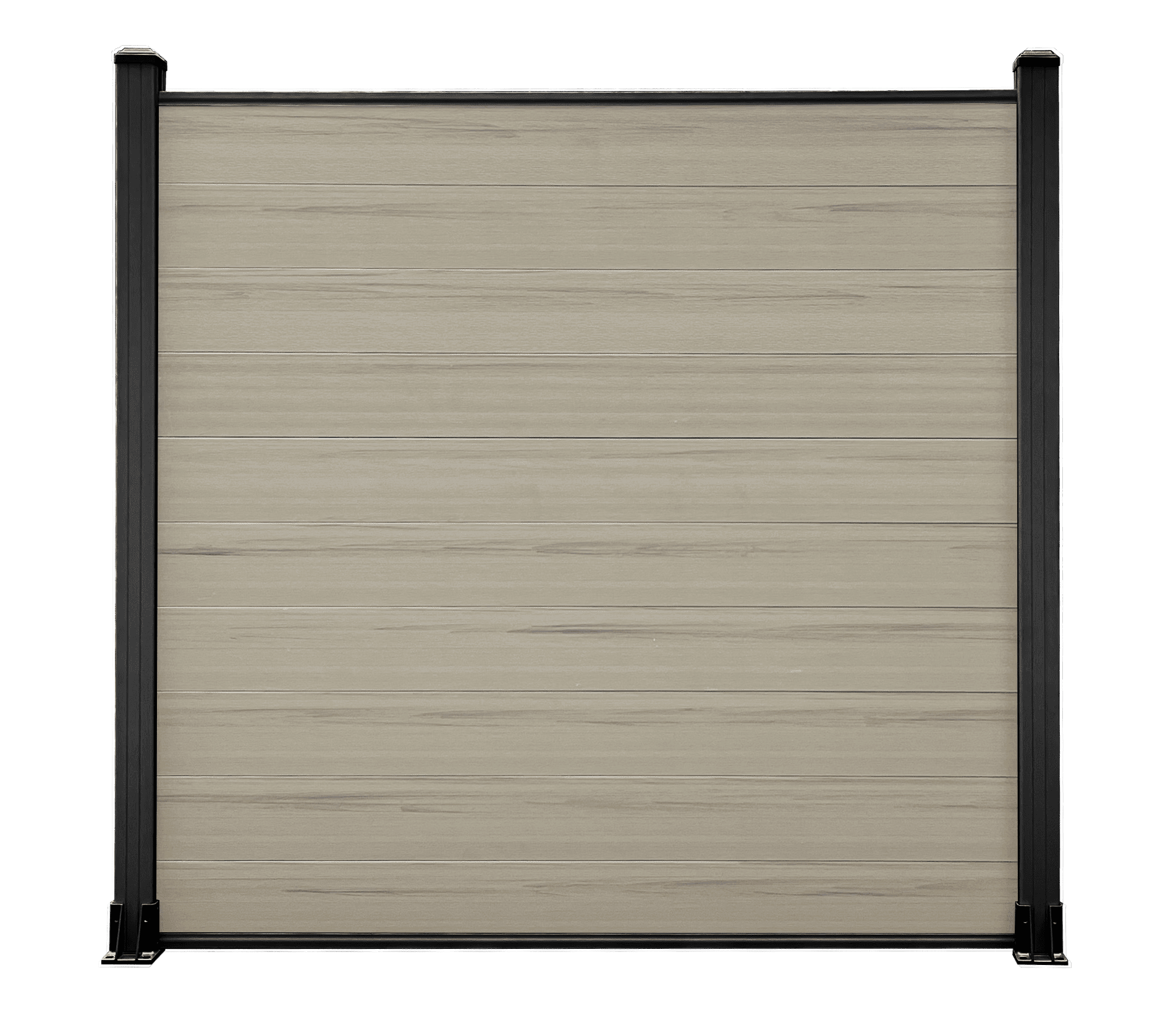 |
| Walnut | Ashwood | Antique |
The Challenge: The protective shield on co-extrusion boards is naturally smooth. In direct sunlight, it can sometimes reflect light, creating a “plastic shine.”
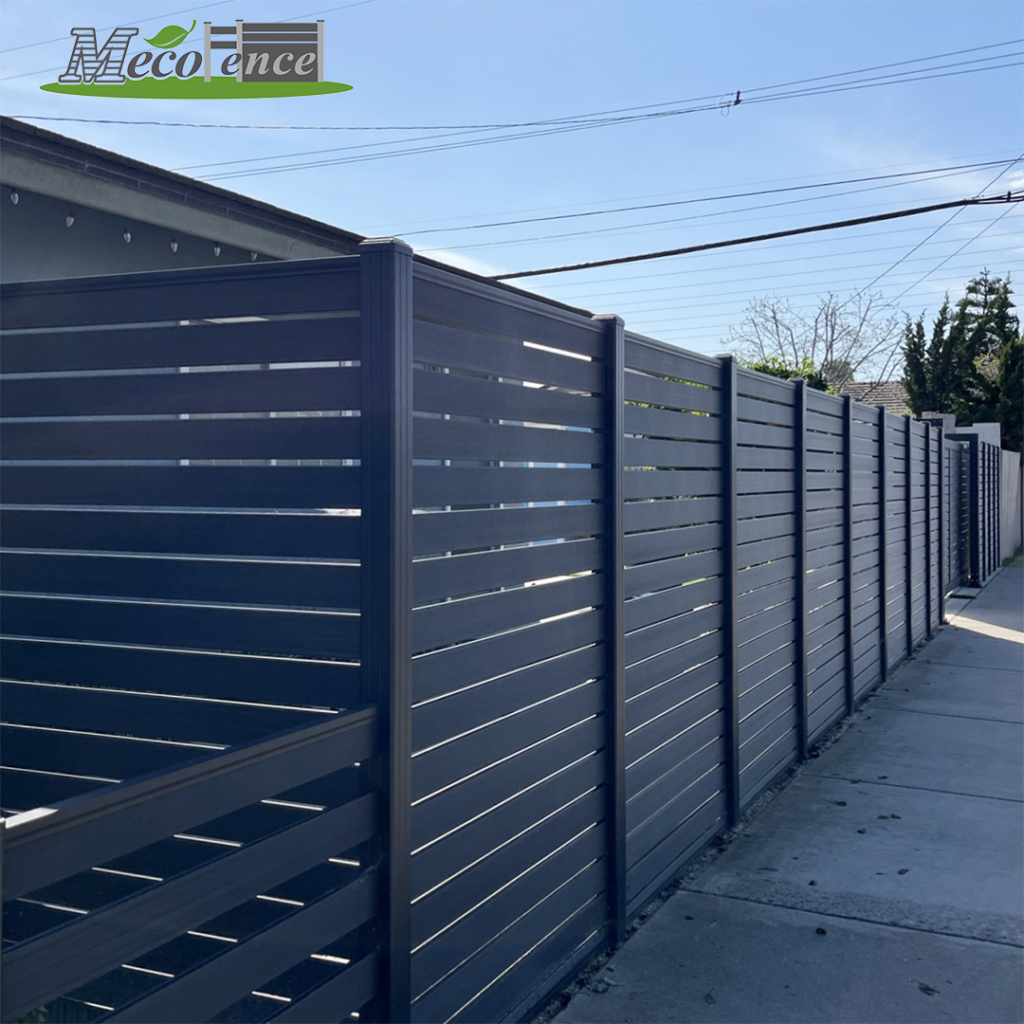
The Solution: We apply a Brushing treatment. Wire wheels scratch fine, microscopic linear lines into the shield surface.
The Result: This process “de-glosses” the surface. It kills the reflection without destroying the protective layer. It creates a sleek, contemporary, matte finish that looks like high-end architectural cladding.
💡 Mecofence Insight: The Problem: Clients in high-sun regions (like California or Australia) dislike the “plastic glare” on some capped composite fencing brands. The Solution: Recommend Co-extrusion with a Brushed Finish. The brushing scatters sunlight, making the fence look premium and matte, while the inner core stays protected from UV rays.
Summary: Which Composite Fencing Should You Stock in 2026?
If you are planning your inventory for the upcoming season, use this quick cheat sheet:
| If your client wants… | Recommended Combination | Why? |
Max Durability & Zero Stains | Co-extrusion + 3D Embossing | The shield is intact and easy to clean (hose off). |
| Natural Wood Feel & Economy | 1st Gen + Sanding | Feels like wood to the touch; weathers naturally. |
| Modern Matte Look (No Shine) | Co-extrusion + Brushing | Removes the glare while keeping the protection. |
The 2026 Frontier: Innovations in Surface Depth & Material
Standard co-extrusion is the current market leader, but at Mecofence, we are already looking at what’s next. For developers and architects aiming for the ultra-premium segment in 2026, standard brushed or flat finishes might not be enough.
We are introducing two breakthrough surface technologies that redefine depth and durability:
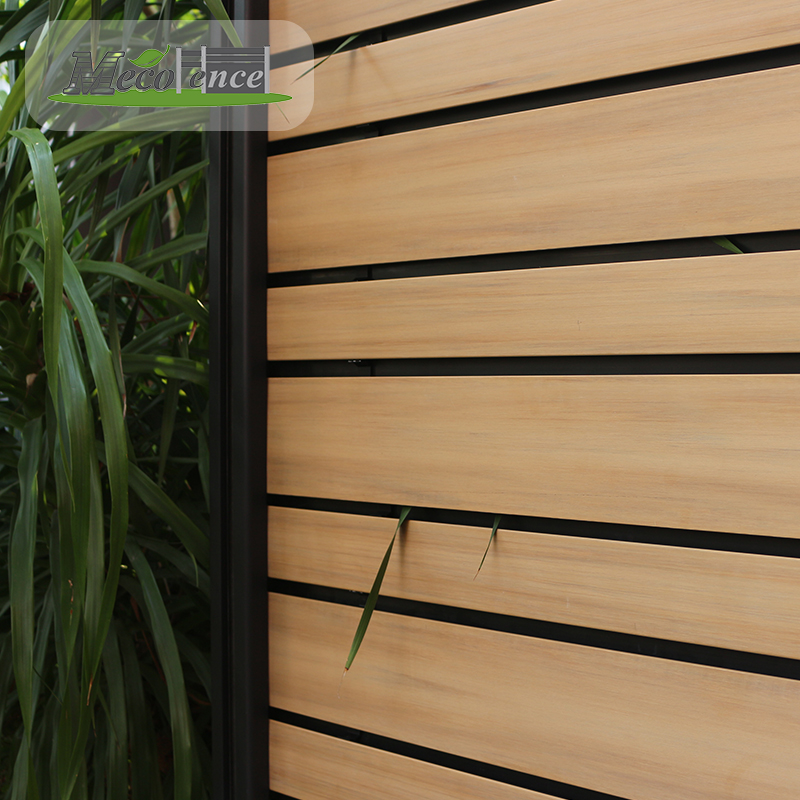 | 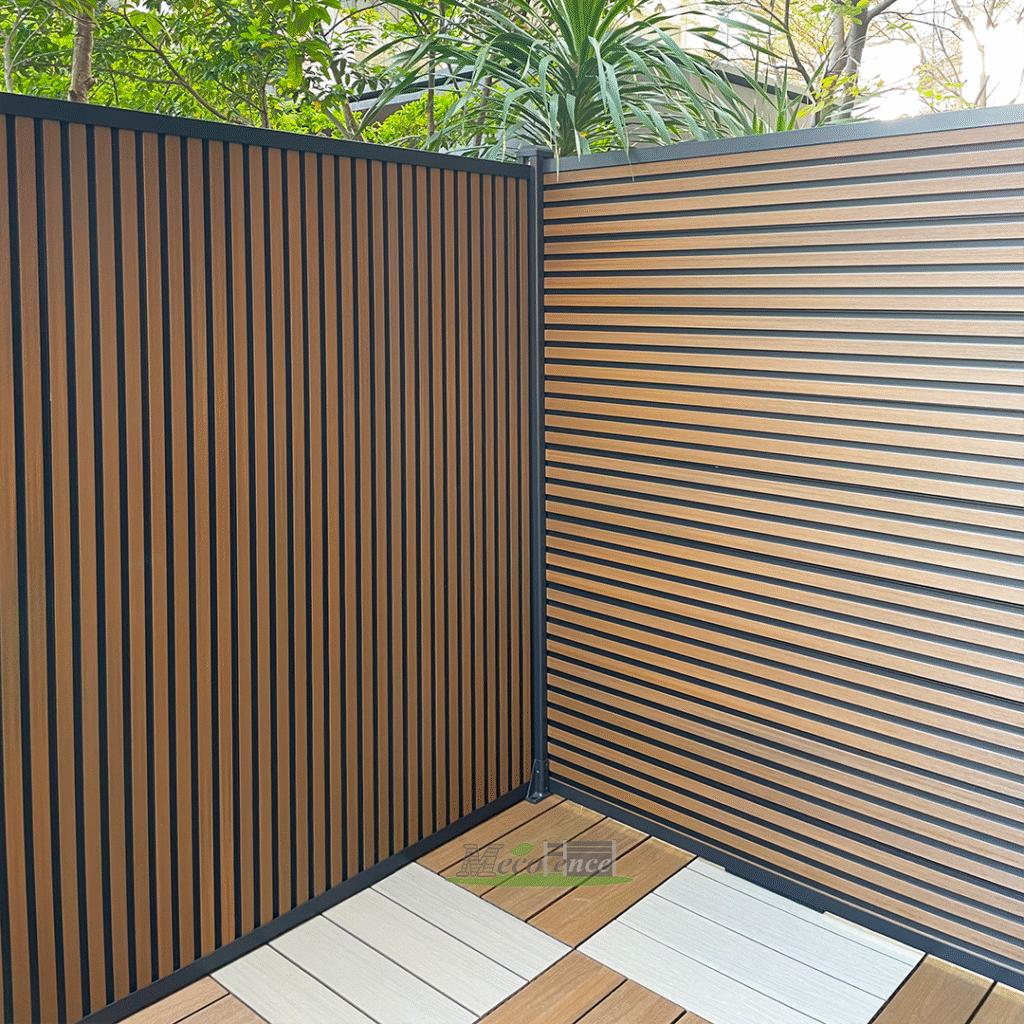 |
| ASA Composite Surface | 3D Slat Dual-Tone Surface |
1. The ASA “Ultra-Shield” Finish
Moving beyond standard PE, we now offer ASA (Acrylonitrile Styrene Acrylate) co-extrusion. Used in automotive exteriors, ASA provides unparalleled UV stability and color retention under extreme heat. It’s the ultimate surface for harsh climates.
2. The 3D Slat Dual-Tone Surface
Texture isn’t just about roughness; it’s about dimension. Our new 3D Slat profiles create dynamic shadow lines and architectural depth. Combined with dual-tone coloring, it offers a sophisticated, linear aesthetic that flat boards cannot achieve.
These aren’t just fences; they are architectural statements for high-value projects.
The Bottom Line
Don’t just sell “fencing.” Sell the technology behind the finish.
At Mecofence, we test every batch to ensure our embossing depth and brushing pressure are consistent. We don’t just make composite fencing look good in the showroom; we make sure it performs in the field for years.
Not sure which texture fits your local market? Order a Mecofence 2026 Sample Kit
Feel the difference between Sanded and Brushed composite finishes yourself.
FAQ
Q1: Which composite fencing surface treatment is best for scratch resistance?
A: Generally, Co-extrusion composite fencing with a 3D Embossed surface offers the best scratch resistance. The protective PE (Polyethylene) cap layer is dense and hard, and the embossed texture helps hide minor abrasions. In contrast, sanded finishes on 1st generation boards are more prone to showing visible scratches, though they can be repaired more easily.
Q2: Can I sand my composite fence panels to remove scratches?
A: It depends on the generation. For 1st Generation (Traditional) composite fencing, yes, you can lightly sand the surface to remove scratches. However, for Co-extrusion (Capped) composite fencing, DO NOT sand it. Sanding will destroy the protective outer shell, causing the board to lose its stain and fade resistance.
Q3: What is the difference between brushed and embossed composite fencing?
A: Embossing presses a wood grain pattern into the board using heat, creating a textured, natural look. Brushing uses wire wheels to create fine, linear scratches. Brushing is primarily used to remove the “plastic shine” from co-extrusion boards, giving them a modern, matte finish that reduces sun glare.
Q4: Why does some composite fencing look shiny/plastic?
A: This usually happens with Co-extrusion boards because the protective PE layer is naturally smooth and reflective. To solve this, high-quality manufacturers like Mecofence apply a Brushed treatment during production. This de-glossing process scatters light and gives the fence a premium, matte timber appearance.