
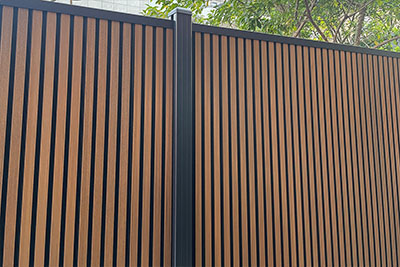
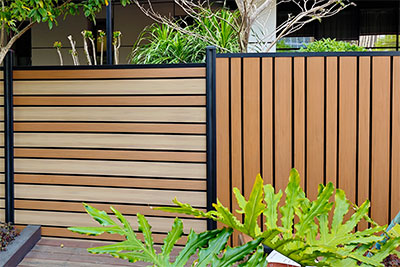
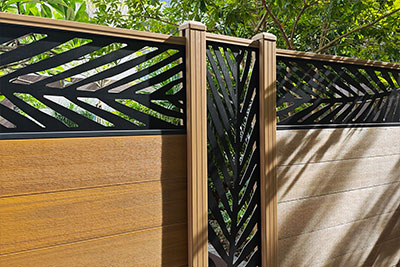
It’s a scenario I’ve seen a hundred times. You need a reliable escape-proof dog fence, but standard options fail. You just spent thousands on a beautiful new fence, yet your dog still found a way out. Then, you hear it. The frantic barking at a passerby. The scratching sound of claws on wood. Or worse—the silence of a dog that has already squeezed through a gap you didn’t know existed.
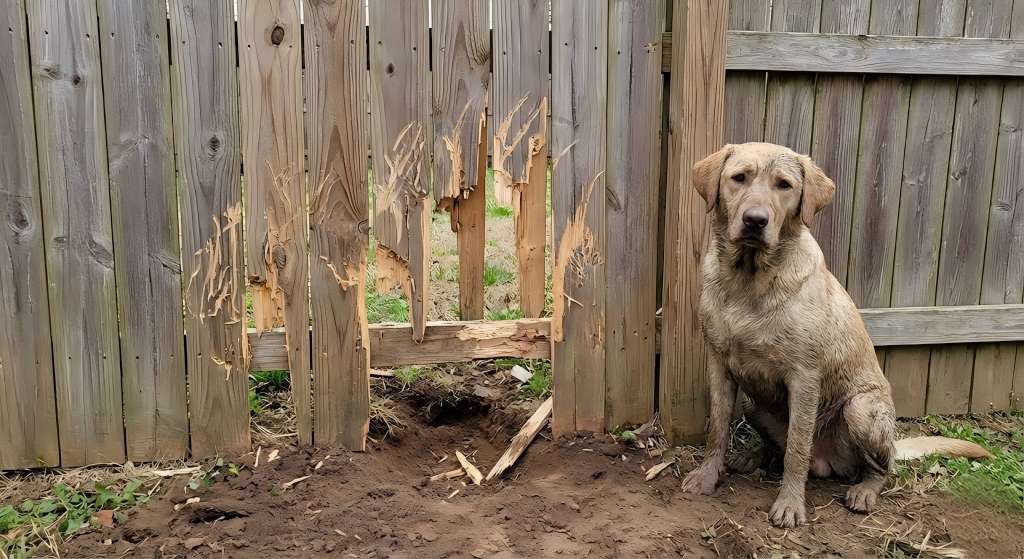
We love our dogs, but we often forget one thing: Dogs are engineers of chaos. They test fences in ways humans don’t.
As fence manufacturers, we usually talk about “curb appeal.” But today, I want to talk about biology. I’ve compared the three most common materials—Wood, Vinyl, and Iron—against the reality of living with a dog. Here is the unvarnished truth about why they fail, and the engineering solution we built to fix it.
The “Visual Trigger” Test (Anxiety & Barking)
The Problem: If they can see it, they will bark at it.
Iron & Aluminum (The “Open Theater”):
Iron fences are elegant and classic. But for a reactive dog, these barriers act like a 24-hour movie screen of stress. Every squirrel, mail carrier, and rolling car is a trigger. I often tell homeowners: “If you value your relationship with your neighbors, don’t give your reactive dog a front-row seat to the sidewalk.”
Standard Vinyl (The “Drum Effect”):
Vinyl offers privacy, yes. But tap on a hollow vinyl post, and you will hear an echo. This material acts like a drum skin. Instead of blocking sound, the hollow structure sometimes amplifies vibration, doing little to calm a sensitive animal.
The Mecofence Solution (The “Library” Effect):
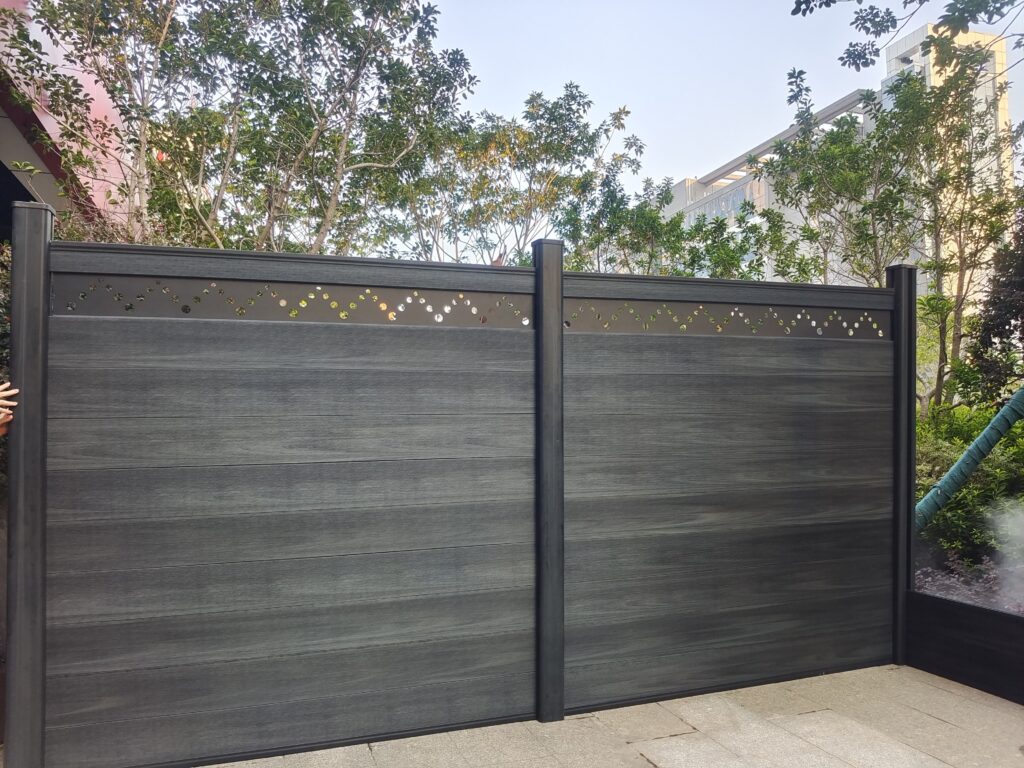
We designed our composite boards with a high-density core. It’s not hollow. When you combine this density with our gap-free Tongue & Groove interlocking system, you get a barrier that deadens sound by roughly 25-28 decibels. The Result: Your dog doesn’t just see less; they hear less. A quieter yard means a calmer dog.
The “Rot Gap” Risk (Escape Artists)
The Problem: Small dogs don’t need a door; they just need 3 inches.
Traditional Wood (The “Biological Clock”):
I love the look of cedar. But wood has a fatal flaw: it drinks water. To prevent rot, any responsible contractor must leave a 2-inch gap between the picket and the dirt. For a Terrier or Beagle, that 2-inch gap is an invitation. And as the wood shrinks over years (hygroscopic shrinking), that gap only gets wider.
The Mecofence Solution (The “Ground Seal”):
Because our composite material is impervious to moisture and rot, we rewrote the installation rules. Your installer can set Mecofence bottom rails flush against the turf or even bury them slightly. The Result: A physical seal against the earth. No daylight. No gaps. No digging triggers.
The “Impact” Reality (Chewers & Jumpers)
The Problem: Big dogs hit hard.
Standard Vinyl (The “Winter Brittleness”): Here is a secret most people won’t tell you: In freezing temperatures, plastic becomes brittle. I’ve seen a 70lb Labrador chase a ball, skid into a vinyl fence, and crack the bottom panel. Sharp plastic shards are dangerous.
Pressure-Treated Wood (The “Splinter” Hazard”): If you have a chewer, wood is a nightmare. Not only do you get splinters in gums, but many treated woods contain copper-based preservatives. It’s great for fighting bugs, but not great for your puppy’s stomach.
The Mecofence Solution (The “Safe-Zone”): Unlike wood or hollow vinyl, Mecofence provides a true escape-proof dog fence solution by eliminating the gaps that paws use to climb. It absorbs impact without shattering. And because the color runs all the way through, even if a determined dog manages to scratch it, there are no toxic splinters—just a surface mark.
Final Verdict: The Ultimate Escape-Proof Dog Fence Scorecard
If you are just marking property lines, any fence will do. But if you are containing a living, thinking animal, look at the data:
| Feature | Iron and Aluminum | Wood | Hollow Vinyl | Mecofence Composite |
| Visual Blocking | Full visibility triggers barking | Shrinkage gaps allow peeping | Blocks view but echoes noise | Blocks view with zero gaps |
| Dig Protection | Large gaps allow squeezing | Gap required to prevent rot | Standard install leaves gaps | Flush to ground installation |
| Sound Dampening | Zero noise reduction | Low noise reduction | Amplifies noise like a drum | High density noise block |
| Safety | Hard metal surface | Toxic splinters and nails | Sharp shards if broken | Smooth and splinter free |
Your fence is the only thing standing between your pet and the busy street. Don’t choose the material that “looks nice.” Choose the material that works.
(Technical Note for Homeowners: Ask your local dealer specifically for the Mecofence Composite Series to ensure you get the high-density noise reduction benefits mentioned above.)
FAQ: The “Pet-Safe” Fence Guide
Q: My dog is a notorious digger. Can this fence be installed flush against the ground? A: Yes, and this is a key difference between materials.
With Wood: Your installer must leave a 2-inch gap to prevent moisture rot. This is often where dogs start digging.
With Mecofence: Because our composite is impervious to ground moisture, your contractor can install the bottom rail directly against the turf or even bury it slightly. This creates a physical “ground seal” that discourages digging behavior.
Q: Will this actually help with my dog’s barking? A: It addresses the root cause: Visibility. Most barking is triggered by “barrier frustration”—seeing a target (like a squirrel or person) but not being able to reach it. Mecofence panels use a Tongue & Groove interlocking system that blocks 100% of the view. Unlike wood, which shrinks and creates “peep holes” over time, our panels stay tight. If they can’t see it, they are less likely to bark at it.
Q: Is the material safe if my dog chews on it? A: Yes. This is a safety decision.
The Risk: Pressure-treated wood often contains copper-based chemicals to deter insects. If chewed, these splinters can be toxic and sharp.
The Mecofence Standard: Our panels are made from eco-friendly wood fibers and HDPE. They are non-toxic, chemical-free, and most importantly, splinter-free. Even if a heavy chewer marks the surface, there are no sharp shards to injure their gums.
Q: I have a large breed (70lbs+). Can they break through this? A: Mecofence is engineered for impact resistance. Hollow vinyl fences can become brittle in winter, leading to cracks if a heavy dog crashes into them. Mecofence uses a high-density semi-solid core that absorbs impact energy similar to a car bumper. It is designed to withstand the weight and force of large active breeds without shattering.
Q: How do I clean it if my dog “marks” the fence? A: This is a hygiene advantage. Wood absorbs urine, which creates permanent odors and stains that attract dogs back to the same spot. Mecofence is non-porous. A simple rinse with a garden hose washes everything away. No absorption means no lingering smells and no permanent stains.