
Most WPC fence “price guides” online are useless to you.
They’re either written for homeowners buying 6 panels at Lowe’s, or they’re quoting fantasy prices from B2B marketplaces where every listing says “$3/meter” to bait your click.
You’re not buying 6 panels. You’re buying a container. Maybe two. And you need real numbers — not Alibaba bait, not Made-in-China teaser pricing, and definitely not quotes for outdated first-generation WPC boards that nobody in your market actually wants anymore.
This guide is built for distributors, contractors, and wholesale buyers who source modern co-extrusion composite fencing from China. We’ll break down every cost layer — from FOB to your warehouse door — with actual figures, real tariff codes, and the math that matters.
Fair warning: prices shift with raw material markets, tariff policy, and order volume. The numbers below reflect Q1 2026 market conditions and should be used as a budgeting framework, not a binding quote.
Let’s get into it.
First: Stop Looking at Alibaba Prices
This needs to be said upfront because it trips up first-time importers every single time.
The “$3–5/meter” prices you see on Alibaba, Made-in-China.com, and similar B2B marketplaces? They’re bait. Those listings are designed to attract clicks and inquiries — not to reflect what you’ll actually pay.
Here’s what’s usually happening:
- The listed price is for boards only — no posts, no rails, no hardware, no packaging
- The product shown is often first-generation WPC (basic embossed, no cap layer), not the co-extruded panels that today’s market actually demands
- The photos may show co-extrusion products, but the price tag is for the cheapest SKU in their catalog
- Some listings are from trading companies, not factories — adding 15–30% to the real cost
If you base your budget on marketplace listings, your actual landed cost will be 40–80% higher than expected.
That’s not a rounding error. That’s a deal-killer.
First-Gen vs. Co-Extrusion: The Price Gap Nobody Talks About
This is the single biggest source of confusion in WPC fence pricing.
When you see a Chinese factory quoting $45–65 per 6ft × 6ft set, they’re almost certainly talking about first-generation WPC fence panels — flat profiles with basic 3D embossing, no protective cap layer, and WPC composite posts.
These products were the industry standard 3–5 years ago. Some factories still push them aggressively because they’re cheaper to produce. But here’s the problem: your end customers don’t want them anymore.
The market has moved to co-extrusion WPC fencing — panels with a 360° protective outer shell (typically ASA or Surlyn) bonded over a WPC core. Co-extrusion panels offer dramatically better scratch resistance, UV stability, and color retention. They look and feel premium.
That’s where the pricing confusion comes in.
We’ve seen some Chinese manufacturers list “$60–70/set” on their websites — but those prices apply to legacy first-gen products with composite posts. The same companies’ co-extrusion products cost significantly more.
So what does modern co-extrusion WPC fencing actually cost?
FOB Price Ranges: What You’ll Actually Pay for Co-Extrusion Panels
Based on current factory-direct pricing from manufacturers in Guangdong, Zhejiang, Shandong, and Anhui provinces — the main WPC production regions — here’s what the FOB China price landscape looks like for a standard 6ft × 6ft (1.83m × 1.83m) co-extrusion WPC fence kit in Q1 2026:
Co-extrusion WPC fence — FOB price per complete set (panels + posts + hardware)
| Configuration | FOB price range | Notes |
|---|---|---|
| Co-extrusion panels + WPC composite post | $70 – $90/set | Standard co-ex finish, solid or dual-tone |
| Co-extrusion panels + aluminum post (80×80mm) | $90 – $120/set | Powder-coated aluminum, most popular for North American market |
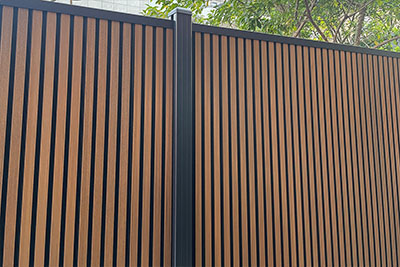
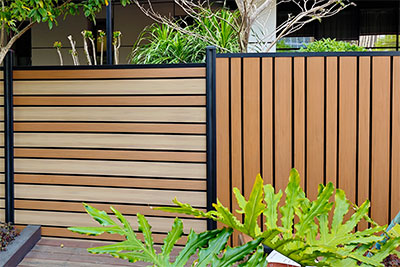
| Premium fluted/slat co-extrusion + aluminum post | $100 – $140/set | 3D fluted profile, dual-tone, OEM packaging |
| ASA co-extrusion PVC panels + aluminum post | $95 – $125/set | 33% lighter than WPC, higher container loading density |
These are complete set prices — panels, posts, post caps, rails, and basic hardware included. The prices above represent quotes from direct manufacturers, not trading companies.
How does this compare to local sourcing in your market?
According to Ecoxplank’s import sourcing analysis, local procurement prices for comparable co-extrusion WPC fence panels in North America and Europe typically run $25–40 per linear meter. Even after shipping, duties, and insurance, your landed cost from China sits around $15–25 per linear meter — well below domestic alternatives.
That gap is your margin.
The Hidden Costs: Shipping, Tariffs & Duties
FOB is just the starting line. Here’s what sits between “factory gate” and “your warehouse.”
1. Ocean freight
Shipping rates fluctuate with fuel surcharges and seasonal demand, but for Q1 2026, expect roughly:
| Route | 40HQ container rate | Per-set estimate (~200 sets/container) |
|---|---|---|
| China → US West Coast | $2,500 – $4,000 | $12 – $20/set |
| China → US East Coast | $3,500 – $5,500 | $17 – $27/set |
| China → UK/Northern Europe | $2,000 – $3,500 | $10 – $17/set |
| China → Australia | $1,800 – $3,000 | $9 – $15/set |
A standard 40HQ container fits approximately 180–220 complete fence sets (6ft × 6ft), depending on panel profile and packing method. Choosing lighter ASA PVC panels over solid WPC can increase loading density by up to 35%, significantly improving your freight cost per set.
Don’t “test” with a 20ft container. Per Ecoxplank’s analysis, orders under one 40ft container don’t offer meaningful cost advantages — per-unit shipping may actually equal or exceed your product cost. If you want to test, order samples first, then commit to at least one full 40HQ.
2. US import tariffs (HS Code 3925.90)
WPC composite fencing is classified under HS Code 3925.90.0000 (“Builders’ ware of plastics, not elsewhere specified”). This classification was confirmed by U.S. Customs and Border Protection ruling N337378 (January 2024) for a WPC fence system consisting of composite boards, aluminum supports, and mounting hardware.
The duty stack for US importers:
- General (MFN) duty rate: 5.3%
- Section 301 tariff (China origin): additional 25% under HTSUS 9903.88.03
- Total effective duty: ~30.3% of declared FOB value
That’s significant. But context matters.
If you’re comparing WPC fencing to full-aluminum fencing (HS 7604/7610), the tariff picture is dramatically worse on the aluminum side. Aluminum extrusions from China currently face up to 365% AD/CVD duties plus an additional 50% surtax in 2026. WPC panels under HS 3925.90 bypass all aluminum-specific penalties.
That’s not a minor detail. For many importers, it’s the entire reason to switch product categories.
Critical note: Your fence system’s HS classification depends on how it’s shipped and what materials dominate. A system with aluminum posts could theoretically be classified under an aluminum heading if CBP determines the aluminum gives it “essential character.” Work with your customs broker to get this right before your first shipment. The USITC HTS database is the authoritative source for current tariff rates.
3. European importers: duties + the FSC/EUDR question
If you’re importing into the EU or UK, the tariff picture is different — and there’s a critical compliance issue many buyers miss entirely.
EU duty: WPC fencing under HS 3925.90 carries a general duty of approximately 6.5% for goods from China. No additional anti-dumping duties currently apply to WPC products (unlike aluminum).
But here’s the bigger issue: EUDR and FSC certification.
The EU Deforestation Regulation (EUDR) requires that products containing wood-derived commodities imported into the EU must be proven deforestation-free, legally produced, and traceable — with geolocation data back to the source forest. By December 2026, your business must be fully EUDR-compliant if you’re selling within or exporting from the EU.
WPC fence panels contain 55–70% wood fiber. That puts them squarely in EUDR scope.
What this means for you as a European importer:
- You must submit a due diligence statement for every shipment containing wood-based products
- Your Chinese supplier needs to provide traceability documentation for the wood fiber used in production
- FSC certification doesn’t automatically make you EUDR-compliant, but it significantly reduces your risk assessment burden and demonstrates credible sourcing practices
- The FSC Regulatory Module is a voluntary add-on standard specifically designed to help certificate holders align with EUDR requirements
Bottom line: If you’re sourcing WPC fencing for the EU market, ask your supplier about FSC certification before you ask about pricing. A factory without FSC — or without the ability to provide wood fiber traceability documentation — could make your goods un-importable into the EU.
Not every Chinese WPC manufacturer has FSC certification. It’s expensive and requires genuine supply chain documentation. If a factory quotes you an unusually low price and doesn’t have FSC, those two facts are probably related.
4. Other landed costs to budget for
These line items add up quietly:
- Marine insurance: 0.3–0.5% of CIF value
- Customs broker fee: $150–$350 per entry
- Port handling & drayage: $500–$1,200 depending on port and distance to your warehouse
- Warehouse receiving: varies by facility
The Full Landed Cost Math: A Real Example
Let’s run the numbers on a concrete scenario.
Scenario: A US-based fence distributor orders 200 sets of co-extrusion WPC fence panels (6ft × 6ft) with aluminum posts, shipped FOB to Los Angeles.
| Cost component | Per set | Total (200 sets) |
|---|---|---|
| FOB price (co-extrusion, aluminum post) | $100.00 | $20,000 |
| Ocean freight (40HQ, China → LA) | $16.00 | $3,200 |
| Marine insurance (0.4% of CIF) | $0.46 | $93 |
| US customs duty (5.3% MFN) | $6.17 | $1,234 |
| Section 301 tariff (25%) | $29.10 | $5,820 |
| Customs broker + port handling | $5.00 | $1,000 |
| Total landed cost | $156.73 | $31,347 |
Your cost per 6ft × 6ft co-extrusion fence set, delivered to your LA warehouse: roughly $157.
But what does that $157 actually mean in terms of profit? Let’s find out.
ROI Reality Check: Your Landed Cost vs. What North American Retailers Are Charging
Theory is nice. But you need to see what end customers are actually paying right now — across multiple major retailers — to understand the real opportunity.
We pulled current pricing from the biggest fencing retail channels in North America. These are real shelf prices, not estimates.
Big-box retail pricing snapshot — composite fence (6′ × 6′ section, April 2026)
| Retailer | Product | What’s included | Retail price (USD) |
|---|---|---|---|
| Home Depot US | Creative Surfaces 6’×6′ co-extruded boards | Boards only (12-pack), no posts/rails | ~$238 |
| Home Depot US | Creative Surfaces 6’×6′ panel + accessories | Panel + hardware, posts sold separately | ~$281 |
| Home Depot US | LH EP 6’×6′ WPC complete kit | Full kit: panels + aluminum posts + hardware | ~$342/set |
| Lowe’s US | Infinity Euro 6’×6′ composite privacy panel | Panel kit with aluminum board, posts separate | ~$280 – $320 |
| Lowe’s US | Slipfence 6’×6′ horizontal composite panel | Panel kit with rails, posts separate | ~$270 – $300 |
| Trex FDS (direct) | Trex Seclusions 6’×8′ panel kit | Panel kit only (no posts) | ~$94 – $144 |
| NewGen Depot | Co-extrusion 6’×6′ complete fence kit | Full kit: panels + aluminum post + hardware | $249 – $329 |
| Home Depot Canada | Creative Surfaces 6’×6′ co-extruded boards | Boards only (12-pack) | CAD $299 |
| Home Depot Canada | Creative Surfaces 6’×6′ panel + rail kit | Panels + rails + brackets, no posts | CAD $399 |
Here’s the critical detail that most price comparisons miss: big-box retailers sell components separately.
A homeowner assembling a complete fence section at Home Depot or Lowe’s — panels, aluminum posts ($100–$150 each), rails, post caps, brackets — ends up spending $400–$550+ USD per 6′ × 6′ section. In Canada, that’s CAD $550–$700+.
Even NewGen Depot, which positions itself as a wholesale-priced alternative to big-box stores, sells co-extrusion complete kits at $249–$329/set and markets this as “half the price of Home Depot and Lowe’s.”
Path A: Selling standard co-extrusion panels — the commodity game
If you import a standard co-extrusion WPC fence — flat board, single-tone color, basic embossed texture — you’re selling a product that already sits on the shelves at Home Depot, Lowe’s, and online retailers. You’re competing on price.
That’s still a viable business. Here’s the math:
| Channel | Your sell price | Your landed cost | Gross margin | Per container (200 sets) |
|---|---|---|---|---|
| Sell to contractors (40% below big-box retail) | ~$285/set | $157/set | $128 (45%) | $25,600 |
| Sell via online distributor channel | ~$300/set | $157/set | $143 (48%) | $28,600 |
| Sell to dealers/retail stores (wholesale) | ~$240/set | $157/set | $83 (35%) | $16,600 |
Decent margins. But here’s the problem with Path A.
Every other importer from China is selling the exact same thing. The standard flat co-extrusion panel in teak, grey, or walnut is available from dozens of Chinese factories. Your competitor down the street sources the identical product from a different factory at a similar price.
That means constant price pressure, margin erosion, and zero customer loyalty. The contractor picks whoever quotes $5 cheaper this month.
Path B: Selling differentiated designs — commanding premium pricing with zero shelf competition
This is where the math changes dramatically.
Products like a dual-tone fluted composite fence or ASA co-extrusion PVC fence panels don’t exist on the shelves at Home Depot, Lowe’s, or any major North American retailer.
Go check. Search “dual-tone composite fence” or “fluted WPC fence panel” on homedepot.com or lowes.com.
You won’t find it.
That absence is your pricing power. Here’s why differentiated designs command a 20–40% premium over commodity panels:
- No price comparison exists. When a homeowner sees a dual-tone 3D fluted fence in your showroom, they can’t pull up Home Depot on their phone and say “I found the same thing for $50 less.” The product simply isn’t there. You set the price.
- Architectural appeal sells itself. A dual-tone fluted panel has visible depth, shadow play, and a distinctly modern aesthetic that flat boards can’t match. Contractors upsell this to design-conscious homeowners as a premium outdoor feature, not just “a fence.” The upsell conversation changes from “it’s cheaper than wood” to “this is a design statement.”
- Exclusivity enables territory protection. If you negotiate OEM exclusivity with a manufacturer for your region, no competitor in your market can offer the same product. That’s a moat around your business that price alone can never build.
- Lower callback costs. ASA co-extrusion PVC panels are 33% lighter than WPC (reducing your shipping cost per container and installation labor), while offering superior UV and scratch resistance. Fewer warranty claims = higher net margin over the product lifecycle.
Here’s the concrete math on differentiated products:
| Channel | Your sell price | Your landed cost | Gross margin | Per container (200 sets) |
|---|---|---|---|---|
| Sell to contractors (premium design) | ~$380/set | $170/set | $210 (55%) | $42,000 |
| Sell via online / showroom (direct) | ~$420/set | $170/set | $250 (60%) | $50,000 |
| Sell to dealers (exclusive territory) | ~$320/set | $170/set | $150 (47%) | $30,000 |
Landed cost is slightly higher (~$170) because premium profiles carry a higher FOB price ($110–$130/set vs. $90–$100 for standard).
The real comparison: commodity vs. differentiated, per container
| Standard co-extrusion (Path A) | Dual-tone / ASA PVC (Path B) | |
|---|---|---|
| FOB cost | $90 – $100/set | $110 – $130/set |
| Landed cost (to LA) | ~$157/set | ~$170/set |
| Typical sell price (to contractors) | $280 – $300/set | $360 – $420/set |
| Gross margin per set | $125 – $143 | $200 – $250 |
| Gross profit per 40HQ container | $25,000 – $28,600 | $40,000 – $50,000 |
| Price competition risk | High — commodity product | Low — exclusive design |
| Customer loyalty | Low — price is everything | High — unique aesthetic |
The differentiated product costs you roughly $13 more per set to import.
It earns you $75–$107 more per set in margin.
That’s a 6–8× return on your incremental investment — per set, every set, every container.
Per container, the gap is roughly $15,000–$21,000 in additional gross profit. Over a year of steady imports (say 6–8 containers), that’s $90,000–$168,000 of extra margin — from one product design decision.
And here’s what doesn’t show up on any spreadsheet: when your contractors install a dual-tone fluted fence, their customers photograph it and share it. The neighbors ask “where did you get that fence?” Your contractor gets a referral. They order more from you.
That flywheel doesn’t start with a commodity product.
MOQ, Lead Times & Payment: What to Expect
Minimum order quantities
Most established co-extrusion WPC fence manufacturers set MOQ at 100–200 sets of standard 6ft × 6ft panels for stock colors, per Ecoxplank’s sourcing guide. Custom colors or non-standard profiles typically require 500+ square meters minimum due to mold and formulation adjustments.
A practical first order: one 40HQ container (~200 sets). This hits the sweet spot for both pricing and shipping efficiency.
Production & shipping timeline
| Phase | Timeline |
|---|---|
| Sample approval | 3–7 days |
| Production (standard colors) | 15–25 days |
| Production (custom colors/OEM) | 25–35 days |
| Ocean freight to US West Coast | 18–25 days |
| Ocean freight to US East Coast | 28–35 days |
| Ocean freight to UK/EU | 25–32 days |
| Ocean freight to Australia | 15–22 days |
Total door-to-door: 6–10 weeks from order confirmation for standard items.
Standard payment terms
Industry norm: 30% T/T deposit, 70% balance before shipment, per Ecoxplank’s market report. Some factories accept L/C at sight for orders above $50,000. For first orders, expect the supplier to require a higher deposit ratio — this is standard practice, not a red flag.
5 Mistakes That Kill Your Margins
We see these patterns across hundreds of wholesale inquiries. Every single one is avoidable.
1. Budgeting based on Alibaba or Made-in-China prices.
Those “$3/meter” listings are for raw boards without posts, hardware, or packaging — often first-gen products with no cap layer. Your actual all-in cost for a complete co-extrusion system will be 3–5× higher. Build your budget from real factory quotes, not marketplace bait.
2. Confusing first-gen WPC with co-extrusion.
A factory quoting $55/set and a factory quoting $95/set may both be telling the truth — they’re just selling completely different products. First-gen WPC panels have no protective cap layer and will show visible wear within 2–3 years. Co-extrusion panels last 15–25 years. Your end customers and their warranty expectations will tell you which one you actually need.
3. Ignoring the HS code question.
Your fence system’s tariff classification determines your duty exposure. A system shipped with aluminum posts could be classified under an aluminum HS heading if CBP determines aluminum gives it “essential character” — potentially triggering massive AD/CVD duties. Get a pre-import classification ruling from your broker before your first shipment.
4. Skipping FSC verification (EU importers).
If you’re importing into the EU, EUDR compliance is not optional after December 2026. A supplier without FSC certification or wood fiber traceability documentation could leave your containers stuck at port. Ask about FSC before you ask about pricing.
5. Testing with a half-empty 20ft container.
Your per-unit economics on a 20ft container are terrible. Shipping cost per set may actually exceed the product cost, making the “test” look unprofitable. Request samples first (most factories ship them free or at minimal cost), validate the product, then commit to a full 40HQ.
What’s Next?
If the math works for your market, the logical next step is simple: get actual quotes based on your specific product mix.
The ranges in this guide give you a solid budgeting framework. But your real landed cost depends on your exact panel profile, post choice, volume, destination port, and whether you need FSC documentation.
→ Request a custom wholesale quote from MecoFence — include your target panel style, estimated quantity, and destination. We provide a detailed FOB quote with container loading plan within 8 hours.
Want to evaluate product quality first? Request free samples — we ship co-extrusion panel samples and color boards worldwide within 3 business days.
Not sure which product fits your market? Read our guide on how to vet a WPC fence manufacturer in China — 7 questions every importer should ask before wiring a deposit.
Last updated: April 2026. Tariff rates and shipping costs are subject to change. Always verify current rates with your customs broker and confirm EUDR/FSC requirements with your compliance team before finalizing purchase decisions.