
Most composite fence manufacturers say they “understand the European market.”
What they mean is: they’ve read a report. Maybe attended a trade show. Possibly replied to some emails from a distributor in Germany.
We took a different approach. We got on a plane.
The Backstory: Why This Composite Fence Manufacturer Won’t Stay in the Factory
If you’ve followed MecoFence, you know 2025 wasn’t a normal year for us.
We spent 180 days on the road — more than half the year — across seven global regions. Testing freeze-thaw stability in Eastern European warehouses. Solving high-labor-cost installation puzzles in New Zealand. Engineering UV shields for 50°C luxury projects in Dubai. Fighting humidity and mold in Southeast Asian tropical heat.
That year didn’t just produce frequent flyer miles. It produced three major product innovations:
- The Multi-Core System — three distinct core “engines” (WPC, PVC, Bamboo-Fiber) matched to specific climate and project requirements
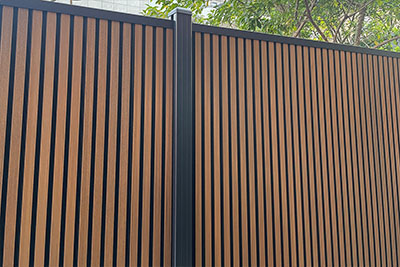
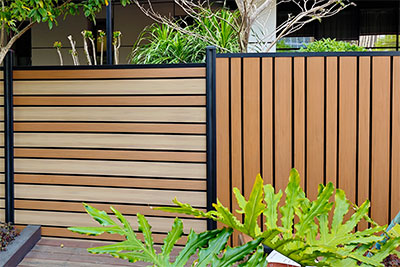
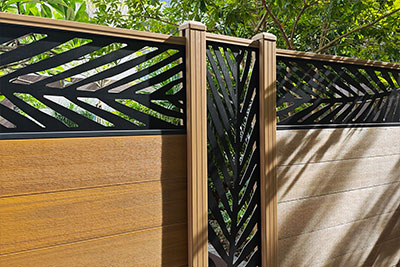
- The Dual-Tone Aero-Privacy Panel — different colors on each side, with hidden ventilation channels that reduce wind load without sacrificing visual privacy
- The Upgraded Snap-Lock Installation System — faster, more intuitive, built entirely from contractor feedback on real job sites
None of those came from lab work alone.
Instead, they came from standing on job sites, watching contractors wrestle with old designs, and asking: “What if we fixed this?”
We closed our 2025 summary with a promise: “2026 is about dominating them together.”
This trip is how we keep that promise.
Why Europe, Why Now: A Composite Fence Manufacturer’s Perspective
Here’s the short version: the European fencing market is enormous, it’s shifting fast, and the timing has never been better for any composite fence manufacturer in Europe.
Here’s the longer version — with numbers.
The Market by the Numbers
The European fencing market was valued at USD $10.5 billion in 2024 and is projected to reach $15.77 billion by 2033, growing at a steady 4.91% CAGR. That’s the overall market — metal, wood, concrete, everything.
But zoom into the composite segment, and the growth story gets sharper.
The global composite fencing market hit $2.5 billion in 2025 and is forecast to reach $4.5 billion by 2033 — a 7% CAGR. Europe accounts for roughly 30% of that global market, making it the second-largest composite fencing region on the planet.
And here’s the kicker: plastic and composite fencing is the fastest-growing material segment in the entire fencing industry, advancing at an 8.7% CAGR through 2030. That’s nearly double the growth rate of metal fencing.
So what’s driving this?
Three forces are converging at the same time:
- EU construction is recovering. After contracting 1.5% in 2024 and stagnating in 2025, EU construction production is forecast to grow 1.5% in 2026. Residential building permits rose 26% year-over-year by September 2025 — the clearest signal in years that new housing is coming back. Germany’s construction sector, the largest in Europe, is returning to growth after contracting over 10% between 2020 and 2025. Spain is forecasting 2.5% construction growth, with permit issuance surging.
- Timber is losing the argument. Rot. Maintenance. Deforestation concerns. Rising timber costs. European homeowners and developers are walking away from wood fencing faster than at any point in the last decade. They want the look of wood without the headaches. That’s composite’s sweet spot.
- Regulation is pushing green. EU environmental rules are tightening — from France’s RE2020 low-carbon building regulations to EU Regulation 923/2023 capping lead stabilizers in PVC. Sustainability certifications like BREEAM and DGNB are no longer nice-to-have. They’re procurement requirements. Manufacturers with FSC certification, recycled-content materials, and clean supply chains are gaining share. Everyone else is scrambling.
That’s the macro picture.
One Continent, Dozens of Micro-Markets
But here’s what the data doesn’t tell you: Europe is not one market. It’s dozens of micro-markets with wildly different tastes, regulations, climates, and buyer expectations.
Consider a homeowner in Tuscany — they want a fence that disappears into the garden. Warm tones, elegant, invisible hardware.
Meanwhile, a property developer in Hamburg wants load-bearing test results and CE documentation before he’ll take a second meeting.
And down in Seville? A contractor needs a panel that won’t warp after five summers of 45°C heat and salt air.
You can’t serve these markets from a spreadsheet.
You have to go.
From March 28 to April 24, 2026, our team is crossing six countries — Italy, France, the Netherlands, Germany, Spain, and Portugal — in 27 days. Site visits. Distributor meetings. Project inspections. And the kind of honest, coffee-fueled conversations that only happen face-to-face.
Here’s our route — and what we’re looking for at every stop.
The Italy Leg: Design Meets Demand (March 28 – April 5)
Italy is our opening chapter. Deliberately.
Our route: Florence → San Severo → Caserta → Bologna → Padova → Bergamo area. Eight nights. Six cities. A full cross-section of the Italian fencing market.
Southern Italy (Caserta, San Severo) is where residential garden fencing demand is surging. New villa developments. Renovation projects. Rural property upgrades. Homeowners are replacing crumbling masonry walls and rusting metal with composite panels that look like real wood and need zero maintenance.
They care about aesthetics first.
For example, our Dual-Tone Aero-Privacy panels — different colors on each side — were partly inspired by Mediterranean markets, where neighbors sharing a fence line can’t agree on a single color. One panel. Two happy households.
In contrast, Northern Italy (Bologna, Padova, Bergamo) is a completely different conversation. Commercial territory — logistics parks, industrial campuses, gated communities. These buyers think in volume, consistency, and certification. They want to know your CE marking is real, your UV test data is current, and your lead times are reliable.
We’re meeting distributors across both ends of this spectrum. The goal isn’t to drop off catalogs. It’s to understand:
- Which SKUs move fastest in each region
- What installation challenges local contractors actually face
- Where our Snap-Lock system can save the most labor time
Because in Italy, as everywhere in Europe, skilled labor is expensive and getting more so.
France: The Lyon Gateway (April 5–7)
Two nights in Lyon sounds brief.
However, it’s not. Lyon sits at Europe’s logistics crossroads — between Paris, Marseille, Geneva, and Barcelona. If you want to understand how composite fencing moves through the French distribution chain, this is where you start.
France has a strong privacy fencing culture. Height restrictions. Boundary regulations. Neighborhood aesthetic codes. These are enforced more strictly here than in most of Europe.
As a result, there’s a specific product need: panels that meet local height codes while delivering full visual privacy.
This is where our engineering earns its keep.
The Aero-Privacy board — with hidden ventilation channels that reduce wind load without creating visible gaps — solves a problem French contractors know well. Tall privacy fences in the Rhône Valley face real structural risk during mistral season.
A fence that breathes without revealing isn’t a luxury feature here. It’s a necessity.
In addition, we’re exploring the French appetite for sustainable building materials. France’s RE2020 regulations are pushing the construction industry toward lower-carbon materials. Our FSC-certified bamboo-fiber core composite was built for exactly this kind of market — where green credentials aren’t optional. They’re a procurement gate.
Netherlands & Germany: Where Engineering Is the Language (April 9–12)
We cross from the Netherlands into Germany by car. Deliberate choice.
Driving through these landscapes gives you what flights don’t: a ground-level view of how fencing is actually used. Residential gardens. Commercial boundaries. Noise barriers. Privacy screens in dense suburban developments.
The Netherlands (April 9–11) is compact and direct. Dutch buyers want three things, in this order:
- Specifications
- Test certificates
- Pricing
Small talk comes after the data sheet checks out.
We respect that. It’s why we bring the full technical portfolio — UV degradation results, freeze-thaw cycle data, load-bearing specs, chemical resistance ratings.
Freiburg, Germany (April 11–12) is no accident on our route. Freiburg is widely considered one of Europe’s greenest cities — a hub for sustainable architecture and eco-conscious construction.
For MecoFence, it’s a proving ground. If our bamboo-fiber core and our certifications (CE, ISO, FSC, SGS) earn trust here, they can earn trust anywhere in Europe.
German buyers think long-term. They don’t ask “what’s your price?” first.
They ask: “What’s your 10-year warranty claim rate?” and “Can you guarantee color consistency across 500 panels?”
Those are the questions we want to hear. Because they’re the ones our R&D team has spent years preparing to answer.
Spain: Sun, Salt, and Scale (April 12–16)
Spain is one of the fastest-growing composite fencing markets in Southern Europe. Our route reflects that ambition.
Tarragona (the Barcelona–Valencia corridor) → Motilla de Palancar (Valencia–Madrid midpoint) → Madrid. This traces the spine of Spain’s construction boom: coastal resort development, expanding suburban communities in the interior, large-scale commercial projects in the capital.
As a result, Spanish construction is forecasting 2.5% growth in 2026, with building permits surging. On top of that, the country’s Mediterranean conditions — extreme UV, salt air, temperature swings from winter rain to 45°C summer peaks — destroy inferior fencing materials within a few years.
Timber rots. Cheap WPC fades and warps. Standard PVC becomes brittle.
This is exactly why we developed Ultra-Shield Co-Extrusion technology. The co-extruded shell protects the structural core from UV degradation and moisture infiltration simultaneously. For coastal developments in Valencia or resort properties along the Costa Dorada, this isn’t a premium upsell.
It’s the minimum viable product.
Furthermore, we’re seeing a shift our 2025 travels predicted: property developers and HOA-style community managers are specifying composite fencing at the design stage — not as an afterthought. They want consistent color, texture, and quality across hundreds of units.
That’s a supply chain conversation, not just a product conversation.
And it’s exactly the kind of partnership MecoFence is built for.
Portugal & the Iberian Close: Zamora to Lisbon to Seville (April 16–24)
The final leg traces the western edge of the Iberian Peninsula — Zamora → Lisbon → Seville.
Portugal is a market in transition. Its construction sector has rebounded strongly — tourism infrastructure, urban renovation in Lisbon and Porto, new residential developments for domestic and international buyers.
Composite fencing adoption is still early here compared to Northern Europe.
That means the window to establish MecoFence as the reference brand is wide open.
Similarly, Portuguese contractors face a familiar problem: clients want natural wood warmth without maintenance headaches. Our WPC composite panels — with realistic wood-grain textures produced through co-extrusion, not surface printing — look right on day one.
And still look right on year ten.
Meanwhile, Seville and Andalusia close our loop with the harshest UV environment on the entire route. Average annual sunshine exceeds 3,000 hours. For any fencing product, this is the ultimate stress test.
We’re visiting project sites and meeting distributors to gather real-world performance data in these conditions — data that feeds directly into our R&D cycle.
What 27 Days Will Teach Us
We don’t travel to confirm what we already believe.
We travel to find out what we’re missing.
Every MecoFence business trip generates insights that change how we engineer, package, and support our products. Our 2025 global tour led directly to the multi-core system, the Dual-Tone Aero-Privacy panel, and the upgraded Snap-Lock installation system.
This 2026 European trip should sharpen our understanding in four critical areas:
1. Regional color and texture preferences. Northern Europe pulls toward cool grays and anthracite. Southern Europe leans warm — teak, walnut, natural oak. Getting the palette right reduces dead stock for distributors and speeds sell-through.
2. Installation realities. European labor costs make our Snap-Lock system a competitive advantage — not just a convenience. But “fast to install” means different things on a flat Dutch lot versus a sloped Andalusian hillside. We’re collecting on-the-ground feedback to refine guides and accessory kits for specific terrain types.
3. Regulatory evolution. EU building codes, environmental regulations, and import standards are tightening. We need to stay ahead — not just compliant, but anticipating the next wave. Our CE, ISO, FSC, and SGS certifications are the baseline. We’re asking partners what’s coming next.
4. Supply chain expectations. Additionally, European distributors increasingly want local stockholding, shorter lead times, and flexible MOQs. We’re evaluating warehousing partnerships and logistics routes across every market we’re visiting.
What This Means for You
If you’re a distributor, contractor or project developer in Europe reading this — here’s what we want you to know.
MecoFence is not a factory that ships containers and hopes for the best.
We are a composite fence manufacturer that has now spent over 200 days in the field across two consecutive years — walking your warehouses, visiting your job sites, listening to your feedback.
When we say we understand the European market, we don’t mean we read a report about it. We mean we’ve driven through it. Touched the soil. Tested our products in your climate. Sat across the table from your team.
So here’s the ask.
If you’re in any of the regions we’re visiting — Italy, France, the Netherlands, Germany, Spain, or Portugal — and you want to explore what a MecoFence partnership looks like, let’s meet while we’re in your market.
Reach out:
- Email: service@mecofence.com
- WhatsApp: +86 18024187532
Because the best fences — like the best partnerships — aren’t built from a distance.
MecoFence — – Global Vision, Local Solutions.
Resources:
- Market Data Forecast — Europe Fencing Market Size, Share & Growth Report, 2033
- Verified Market Reports — Composite Fencing Market Size, Trends & Forecast 2033
- Archive Market Research — Composite Fencing Decade Long Trends, Analysis and Forecast 2025-2033
- Mordor Intelligence — Fencing Market Size, Growth, Share & Trends Report 2030
- ING Think — Construction Outlook 2026: Growth Returns to the European Construction Sector
- BUILD UP (European Commission) — European Construction Begins to Regain Momentum in 2026
- Bain & Company — Europe’s Construction Industry Is Turning a Corner
- Atradius — Industry Trends Construction, February 2026
- IndexBox — Fencing Systems Market in Europe, 2026 Analysis
- Grand View Research — Fencing Market Size, Share & Growth Analysis Report, 2030