
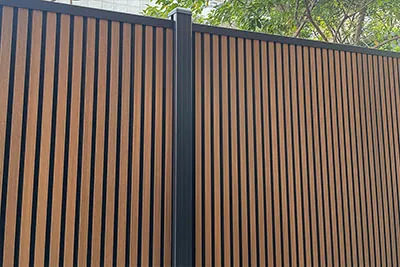
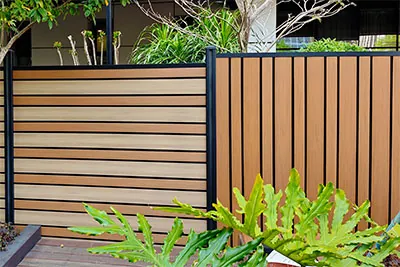
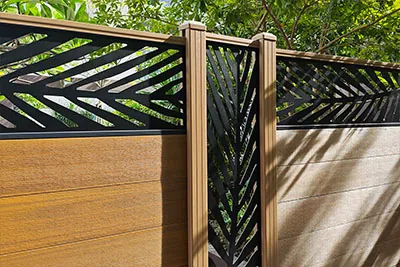
Sourcing WPC composite fencing from China can unlock serious margin advantages — but only if you’re working with the right manufacturer. A single bad partnership can mean delayed containers, failed inspections, warranty nightmares, and angry contractors demanding refunds.
The good news? Most supply chain disasters are avoidable. After working with distributors and contractors across North America, Europe, and Australia, we’ve identified the seven questions that separate reliable WPC fence manufacturers from the ones who will cost you money, time, and clients.
1. WPC Fence Materials: What Should a China Manufacturer Provide?
This is the most important question, and it’s where most importers don’t dig deep enough.
WPC (Wood Plastic Composite) fencing can be made with vastly different formulations. Low-cost manufacturers often substitute recycled HDPE or PP with lower-grade regrind plastics or use wood fiber with inconsistent moisture content. The result looks fine in a product photo but warps, cracks, or fades within 18 months in the field.
What to ask for:
- Material composition sheet (percentage of wood fiber, thermoplastic resin, and additives)
- Supplier certification for the resin used (virgin vs. recycled)
- UV stabilizer type and loading rate — Surlyn and ASA capping are the current gold standard for color retention
At MecoFence, every fence panel is co-extruded with high-concentration Surlyn or ASA (Acrylonitrile Styrene Acrylate) cap layer. This is the same UV-resistant material used in automotive exteriors — not a thin coating that peels off.
2. What certifications does your product hold?
Certifications are not just paperwork. They are your legal protection when a contractor claims the product failed, and your sales tool when a distributor asks why they should carry your brand over a domestic competitor.
Key certifications to look for by market:
| Market | Certifications to Request |
|---|---|
| USA / Canada | ASTM E84 (fire), ASTM D6662 (WPC performance), CARB Phase 2 (formaldehyde) |
| UK / Europe | CE Marking, EN 15534, REACH compliance |
| Australia | AS/NZS 1530 (fire), BAL ratings for bushfire zones |
| Global | ISO 9001 (quality management), ISO 14001 (environmental) |
Ask to see the actual test reports, not just logos on a brochure. Legitimate manufacturers will provide third-party lab reports from recognized bodies like SGS, Intertek, or Bureau Veritas.
3. What is your minimum order quantity — and what does a realistic first order look like?
This question reveals a lot about how a manufacturer works and whether they’re suited to your business model.
High MOQs (e.g., 5 full containers minimum) may signal a factory that’s not set up to handle smaller distributors. Very low MOQs with no flexibility often mean a trading company, not a factory.
What to ask:
- What is the MOQ per SKU vs. per order?
- Can I mix products within a container?
- Do you offer sample orders before the first full shipment?
A practical first order for a new North American distributor typically runs one 40HQ container per product line, which equates to roughly 800–1,200 linear meters of fencing depending on panel profile. A good manufacturer will walk you through the math clearly and provide a container loading plan before you commit.
4. How do you handle quality control — at what stages of production?
One-time QC at the end of a production run is inadequate. By the time a finished panel fails inspection, the entire batch may already be packed and ready to ship.
What a serious manufacturer should have:
- Incoming material QC: Raw materials tested for moisture content, melt index, and purity before entering production
- In-process QC: Co-extrusion line parameters (temperature, pressure, line speed) monitored continuously
- Finished product QC: Dimensional tolerance checks, surface hardness, color consistency, and load-bearing tests on finished panels
- Pre-shipment inspection: Third-party or in-house inspection against your agreed product specification, with a documented report sent before container is sealed
Ask: “Can I commission a third-party pre-shipment inspection, and will you cooperate fully with the inspector?” A hesitant or evasive answer is a serious red flag.
5. What is your lead time, and how do you communicate during production?
Lead time promises are easy to make and hard to keep. What you really want to understand is the factory’s production visibility and communication discipline.
Realistic lead times for WPC fencing (2025–2026):
- Standard in-stock profiles: 15–25 days
- Custom color/profile: 35–50 days
- Peak season (pre-summer, Q1 of Chinese New Year): add 2–3 weeks
What separates reliable factories from risky ones:
Reliable manufacturers will proactively send production updates — raw material loading confirmation, extrusion run start date, QC results, packing photos, and booking confirmation — without you chasing them. If a factory only communicates when you push them, that pattern will continue when problems arise.
At MecoFence, every order is assigned a dedicated account manager who provides structured production updates at each milestone. Clients in the US, UK, and Australia receive updates aligned to their local business hours.
6. Do you offer OEM / private label, and what does that process look like?
For distributors building their own brand, or contractors who want to offer an exclusive product line, OEM capability is critical.
What to clarify upfront:
- Minimum quantities for custom colors, profiles, or packaging
- Who owns the mold if a custom profile is tooled?
- What is the lead time for new color development vs. standard palette?
- Can you provide custom packaging, hardware kits, and branded installation guides?
Some manufacturers charge tooling fees that are never recouped on realistic order volumes. Others have extensive standard mold libraries — meaning you can get a “custom” look by combining existing profiles with proprietary packaging and color selection, with no tooling cost.
Also ask: What happens to your molds and formulations if you later switch suppliers? Clarify IP ownership in writing before production begins.
7. Can you provide references from existing importers in my market?
This is the most underused vetting question — and the most powerful.
A manufacturer with genuine experience supplying distributors in North America, the UK, or Australia will be able to connect you with at least one or two existing clients for a reference call. Not every manufacturer will agree to this (for competitive reasons), but the willingness to offer it signals confidence in their track record.
If direct references aren’t possible, ask for:
- Photos of completed projects using their product (with location context)
- Logistics documentation from previous shipments to your target market (freight terms, HS code history)
- Customs clearance records showing the product has successfully passed your market’s import inspections
Social proof isn’t just for B2C. In B2B, it’s often the final decision-maker.
A Quick Vetting Checklist
Before placing your first order with any WPC fence manufacturer in China, confirm you have the following:
- [ ] Material composition sheet with cap layer specification
- [ ] Third-party test reports for your target market (ASTM / CE / AS-NZS)
- [ ] Written MOQ, lead time, and payment terms
- [ ] Production QC process documented in writing
- [ ] Sample panels received and tested in your local climate
- [ ] OEM / packaging scope confirmed (if applicable)
- [ ] References from at least one existing importer in your region
Why Distributors Choose MecoFence
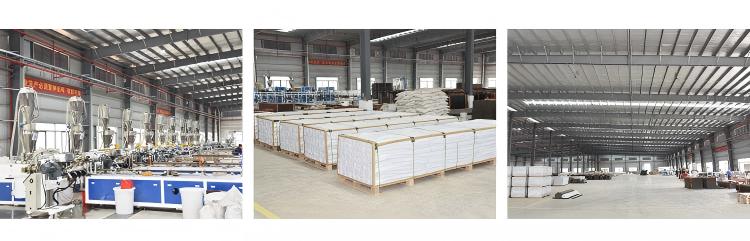
MecoFence is a WPC composite fencing manufacturer with production facilities in Xinxing, Yunfu, Guangdong, China and a trade showroom in Foshan — supplying distributors and contractors worldwide.
We work exclusively with distributors, contractors, and import partners. We do not sell directly to consumers. That means your margin is protected, and our entire operation is built around making you successful in your market.
Our standard B2B package includes:
- ASA or Surlyn co-extruded composite fence panels in 6 standard colors, with custom color available
- CE, ASTM-compliant products with full third-party test documentation
- MOQs starting from 1 × 40HQ container with mixed-SKU flexibility
- Dedicated account manager and milestone-based production updates
- OEM / private label available from 2 × 40HQ per SKU
- FOB pricing available to major US, UK, EU, and AU ports
Ready to Start a Conversation?
If you’re evaluating WPC fence manufacturers for your distribution network, we’d welcome a no-obligation discussion. We’ll walk you through our product range, certifications, pricing, and lead times — and we’re happy to send samples to your location before any commitment.
Or email us directly: [email protected]
MecoFence — WPC Composite Fencing for Trade Partners Worldwide